Istanbul packs big feelings into small streets. This Galata-to-Balat route strings together Galata Tower, art nouveau steps, Orthodox landmarks, and the color-washed lanes of Balat, with a ferry ride for a real change of pace and angle.
Two things I like a lot are the ferry transport over the Golden Horn and the mix of serious and everyday stops, like SALT Galata’s research spaces alongside simple neighborhood stairways. You get sights you can’t reach in a hurry, without a frantic schedule.
One thing to consider: the Galata Tower entry ticket isn’t included, so you’ll want to plan for that extra cost if you want to go up.
In This Review
- Key points I’d circle before you go
- How the Galata-to-Balat Route Works in 4–6 Hours
- Galata Tower: UNESCO-era symbolism and what the ticket means
- Kamondo Stairs: the art-nouveau stairway you’ll actually remember
- SALT Galata: research spaces, Ottoman banking artifacts, and talks
- Karaköy ferry and the Patriarchate: water views plus spiritual power
- Balat’s colorful stairways: Sephardic neighborhoods and UNESCO protection
- Saint Stephen’s Bulgarian Orthodox Church: the Bulgarian Iron Church you can’t miss
- Golden Horn finale: views and the Egyptian Bazaar sweet stop
- Price and value: what $105 buys you and what costs extra
- Who this tour fits best (and who should pick a different day)
- Should you book the Galata Tower to Balat experience?
- FAQ
- Is the Galata Tower entry ticket included?
- How long is the tour?
- What’s included in the $105 price?
- Does the tour include church-related donations?
- Is the tour offered in English?
- Where do I start and where do I end?
- Can I cancel for a full refund?
Key points I’d circle before you go

- Galata Tower skyline stop with its background as a former fire watchtower
- Kamondo Stairs: Art Nouveau design finished in the 1850s
- SALT Galata: research halls, exhibitions, talks, and Ottoman Bank Museum Collection documents
- A ferry ride from Karaköy for classic Golden Horn views on both sides of the city
- Balat’s colored stairways and neighborhood feel tied to Byzantine and Sephardic layers
- Bulgarian Iron Church (St. Stephen’s): prefabricated cast iron elements in Neo-Byzantine style
How the Galata-to-Balat Route Works in 4–6 Hours
This tour is built for a day when you want depth without running from one ticket line to another. The pace is designed around short stops, photos, and layered context, with time to look closely at architecture and street life instead of just passing by.
You’ll spend a good chunk of the day in the Beyoğlu-to-Fatih corridor, starting near Tünel Meydanı Sokağı Şahkulu and ending at the Egyptian Bazaar area. The route includes stairs (at Kamondo and in Balat), plus walking that feels local but manageable for most people.
If you like your sightseeing organized but not stiff, this format usually hits the sweet spot. And because it’s a private tour for your group, you’re less likely to feel rushed by strangers weaving through your moment.
You can also read our reviews of more tours and experiences in Istanbul.


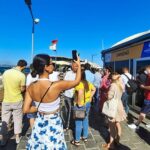
Galata Tower: UNESCO-era symbolism and what the ticket means
Galata Tower sits right where it should—on the skyline, anchoring the view over Istanbul. It’s described as one of the oldest towers in the world, and it even made an appearance on UNESCO’s World Heritage Temporary List in 2013. Historically, it served as a long-term fire watchtower, which explains why it became known as the Galata Fire Tower.
This stop is attractive for two reasons. First, the tower is visually iconic even when you’re just viewing it from outside, so you get value whether you go up or not. Second, the fire-watch backstory gives you a practical way to read the city—higher points mattered for safety and early warning.
The key drawback is straightforward: admission to Galata Tower is not included. So if you want the panoramic payoff from the top, budget for the ticket and give yourself a bit of flexibility in the timing.
Kamondo Stairs: the art-nouveau stairway you’ll actually remember
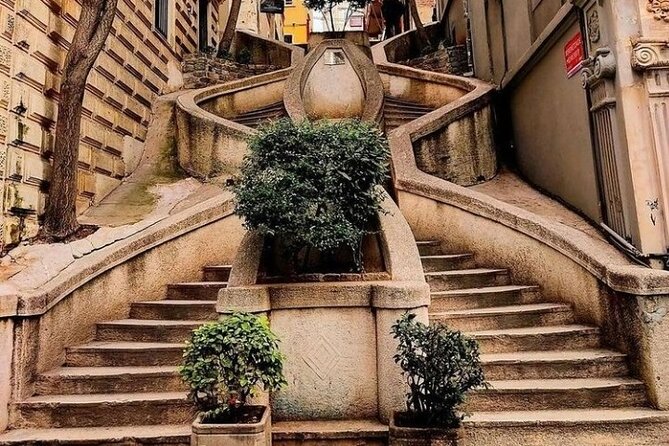
Kamondo Stairs are small, but they’re the kind of small that stays with you. Completed in the 1850s by the House of Camondo, this is a classic Galata detail: a designed stairway, not just a functional one.
What I like about this stop is that it breaks the day into something human-scale. You’re not stuck staring at big monuments; you’re walking through a characterful micro-world. The stop also helps you reset after Galata Tower, because it’s close enough to keep momentum but different enough to feel like a real discovery.
There’s also a practical upside: the visit time is short, so it doesn’t steal your day. If you’re the type who appreciates architecture details that most people speed past, this fits you.
SALT Galata: research spaces, Ottoman banking artifacts, and talks
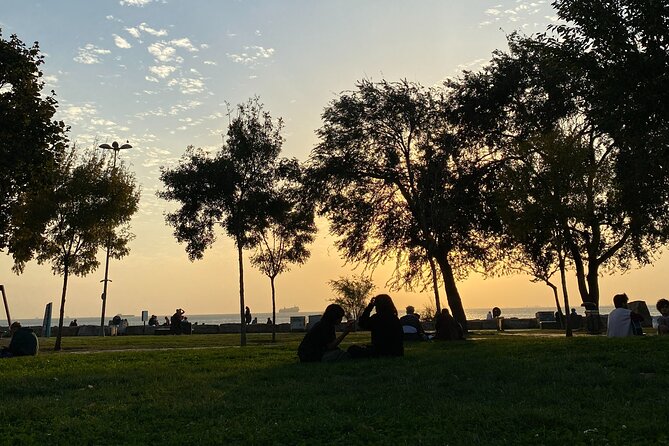
SALT Galata adds a thoughtful turn to what could otherwise be only churches and streets. It houses several parts of the SALT institution, including the Salt Research Gregory Michael Kiez Hall (a specialized library) and the Salt Research Ferit F. Şahenk Hall, where researchers can use the space upon registration. There’s also an auditorium that hosts talks and conferences.
The most useful thing for you to know is that SALT Galata isn’t just an art stop. It includes a permanent exhibition that explains the institution’s 145-year history, using documents from the Ottoman Bank Museum Collection.
Why this matters in real travel terms: Istanbul can feel like a stack of eras, and SALT gives you a way to connect those eras through records and institutional memory. It’s quieter than the street, and that makes it a good pause in the middle of a walk-heavy day.
In the provided experience info, this stop includes admission time. So you’re not paying extra separately at SALT, and you can focus on reading, looking, and deciding what you want to learn more about.
Karaköy ferry and the Patriarchate: water views plus spiritual power
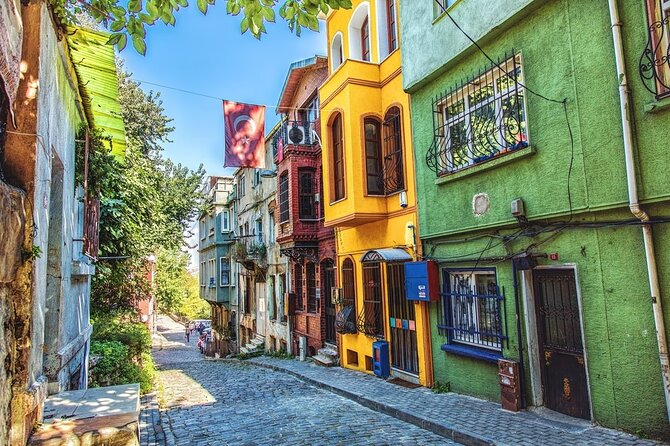
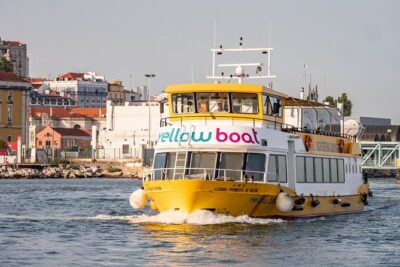
From Karaköy Rihtim, you take a ferry. That’s more than a transport move—it’s one of the best ways to see Istanbul without burning time in traffic or walking uphill. And since you’re looking across the Golden Horn, it’s also where you get a feeling for the city’s geography: European side on one view, Anatolian side on the other.
After the water break, you continue to the Ecumenical Patriarchate of Constantinople. This is an important Eastern Orthodox institution led by the Ecumenical Patriarch of Constantinople. The tour context frames it as part of the broader Eastern Orthodox structure, made up of autocephalous churches.
This part works well if you enjoy seeing living heritage, not just buildings as backdrops. You’ll get time to understand what the Patriarchate represents within Eastern Orthodoxy, and then you’re free to treat it like a place of meaning rather than a quick photo stop.
Also worth noting: the experience includes donations for churches. That’s a small but helpful way to respect sacred spaces without turning the visit into a transaction.





Balat’s colorful stairways: Sephardic neighborhoods and UNESCO protection
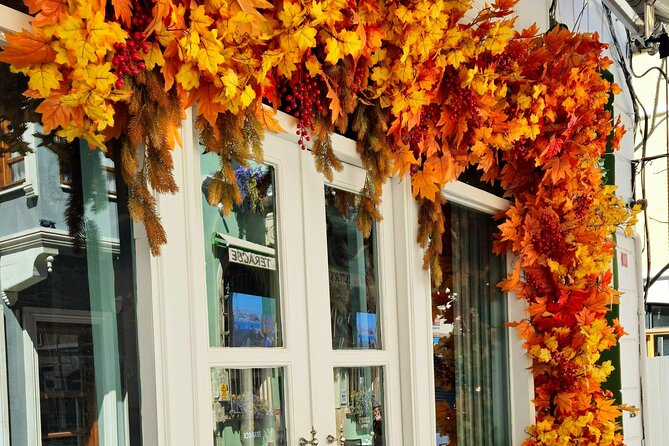
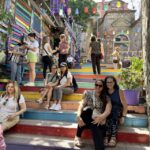
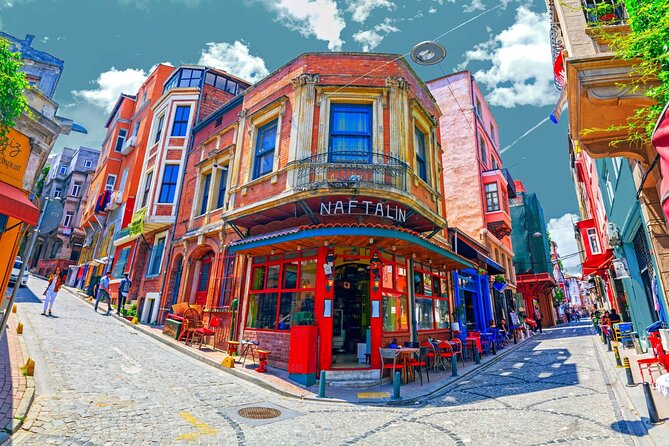
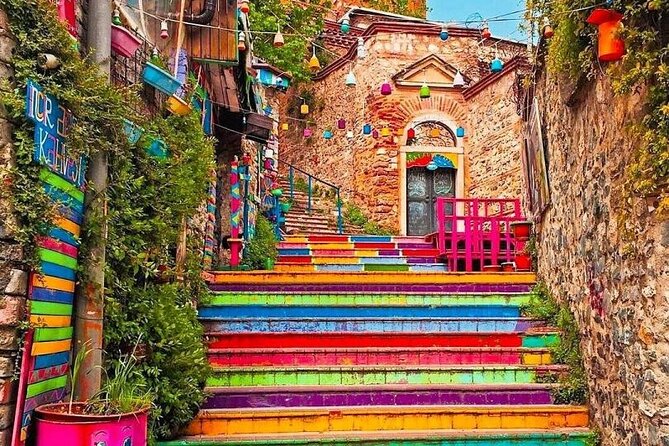
Balat is where the tour starts to feel like you’re walking inside a layered story. The area is known for cute cafes, colorful streets, and streets that carry the smell of history. You’ll visit the Balat Colored Stairs, and then you’ll move on to the Colorful Stairs stop as well.
Here’s the context that makes those photo spots feel less random. Balat is described as having a rich Byzantine heritage and an old Jewish neighborhood, with a large Jewish population. The Sephardim—exiled from Spain in the 15th century—settled here. That means the buildings and streets aren’t only pretty; they’re part of a long human pattern of resettlement, community building, and survival.
The tour info also points out something practical and historical: many houses were wooden before the 18th and 19th centuries, but fires changed the building materials over time, pushing masonry construction. That fire history also connects to why you’ll see fewer single-story buildings, with houses built in clusters.
This stop is short in time, but it’s the kind of short that’s worth it because the streets themselves are the attraction. Go slow, look up, and don’t just chase the brightest paint. The stairways are often where you find the best angles and the most texture.
Saint Stephen’s Bulgarian Orthodox Church: the Bulgarian Iron Church you can’t miss
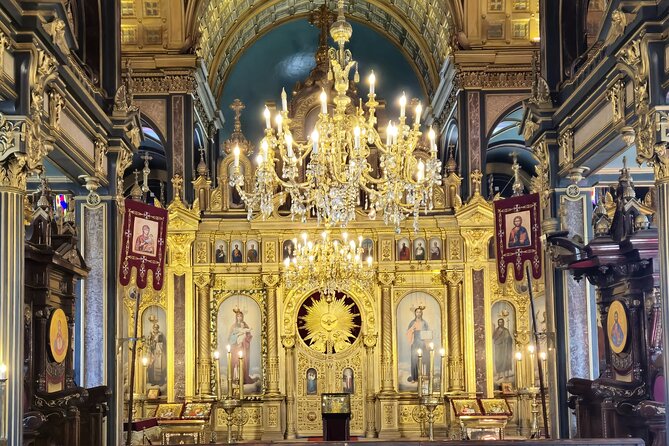
Balat’s most distinctive church visit is Saint Stephen’s Bulgarian Orthodox Church, also called the Bulgarian Iron Church. The reason it stands out is in the construction: it’s famous for being made of prefabricated cast iron elements in a Neo-Byzantine style.
If you like unusual building methods, this is one of the stops that can surprise you. Cast iron is not what you expect to hear in a neighborhood where the visual language often points you toward older stone or masonry styles. Even if you don’t study architecture, the name alone signals that something different happened here.
The tour places this church in the context of the Bulgarian Christian minority in Istanbul. That matters because it changes how you see it: not just as a quirky building, but as a marker of how different communities shaped the city’s religious landscape.
This church stop includes admission time in the experience, so it’s not only a view from the street. You’ll have enough time to understand the significance and actually see what makes this church famous.
Golden Horn finale: views and the Egyptian Bazaar sweet stop
The tour ends with a stronger sensory shift. After Balat, you return to the Golden Horn viewpoint for classic panoramas of Istanbul from the estuary. The tour information specifically calls out watching the European and Anatolian sides, which is a great way to think about what you’re seeing: you’re not just looking at water; you’re looking at Istanbul’s internal geography.
Then comes the finish: the Egyptian Bazaar. The experience includes time here plus a practical payoff—you’ll taste Turkish dessert and drinks free. That’s the kind of inclusion that’s easy to underestimate, because at the end of a walking day, free dessert is the simplest, happiest kind of value.
The Egyptian Bazaar is also described as one of Istanbul’s oldest bazaars, so you’re ending in a place that feels established, not staged. It’s a strong final act: a market atmosphere where your day’s stories from Galata and Balat still hang in the air, even if you’re just shopping for one last snack.
Price and value: what $105 buys you and what costs extra
At $105 per person for a 4 to 6 hour tour, the question isn’t just whether it’s affordable. It’s what’s bundled so you don’t have to coordinate everything yourself.
In the included list, you get:
- a professional English-speaking guide
- ferry transportation
- admission included for most listed stops
- free tasting for drinks and dessert
- donations for churches
- all taxes
- a mobile ticket
The one clear extra is the Galata Tower entry ticket, which is not included. That’s the main add-on cost to plan for. If you’re sure you want the top of the tower, factor that ticket into your day budget before you commit.
One more value angle: it’s priced for a group experience, with group discounts, and it’s also described as a private tour for your group. Private doesn’t always mean expensive, and here it helps you move at a comfortable pace through stair-heavy areas.
Overall, I think the value is strongest if you care about context: the guide explains what you’re seeing at each site, and the stops are chosen to link architecture, religion, and neighborhood identity.
Who this tour fits best (and who should pick a different day)
This tour is a great match if you want:
- a structured route across Galata and Balat without guessing the order
- meaningful stops tied to Orthodox heritage and church architecture
- a water break via ferry, then a market finish with dessert
It’s also ideal for people who like walking at an easy-to-moderate pace and don’t mind spending time on stairs in two different neighborhoods. If you’re sensitive to steps, you may want to think carefully about the Kamondo and Balat stair segments.
If you’re the type who prefers only one or two major landmarks and zero side streets, this might feel like more variety than you need. But if you love the way small stops add texture, this itinerary gives you that.
Should you book the Galata Tower to Balat experience?
Yes, if you want a day that combines iconic Istanbul views with neighborhood texture, and you like learning the “why” behind the buildings. The ferry ride, the SALT Galata stop, and the Bulgarian Iron Church are the kind of mix that makes the day feel different from a standard photo walk.
Book it especially if you’re planning to end your trip in the Egyptian Bazaar area and you’d rather have someone map the sequence for you. Just remember the one catch: if you want Galata Tower access, plan for the separate entry ticket.
FAQ
Is the Galata Tower entry ticket included?
No. Galata Tower admission is not included, so you’ll need to buy that ticket separately if you want to go up.
How long is the tour?
The tour is approximately 4 to 6 hours.
What’s included in the $105 price?
The price includes an English-speaking guide, transportation by ferry, admission tickets for the listed stops (except Galata Tower), free drinks and dessert tasting, donations for churches, all taxes, and a mobile ticket.
Does the tour include church-related donations?
Yes. Donations for churches are included in the experience.
Is the tour offered in English?
Yes, the tour is offered in English.
Where do I start and where do I end?
The tour starts near Tünel Meydanı Sokağı Şahkulu (Beyoğlu). It ends at the Egyptian Bazaar area near Rüstem Paşa in Fatih, and you’ll end by the Spicy Bazaar.
Can I cancel for a full refund?
Yes. You can cancel up to 24 hours in advance for a full refund.