REVIEW · FREDERICK
Harpers Ferry Audio Tour History, Ruins and River Views
Book on Viator →Operated by Drives & Detours · Bookable on Viator
Harpers Ferry tells its story on foot. This self-guided audio tour strings together iconic stops—rail-era Harpers Ferry landmarks, Civil War flashpoints tied to John Brown, and wide river overlooks—so you can go at your own pace while your phone narrates what you’re seeing. Two things I especially like are how the route keeps you moving through both Lower Town and the high viewpoints, and how the audio adds context fast when you’re standing right where events unfolded. One caution: cell service can be spotty, so you’ll want to download ahead and be ready for some steep walking, including a cliffside staircase.
You also get real structure, not just random plaques. The audio guide is tied to locations and can start automatically when you reach certain spots, which helps when you’re hopping between viewpoints and ruins. The tour stays to a tight theme—history, conflict, education, and the land itself—without turning into a lecture. The main drawback is that the app layout isn’t perfect, and the walking can feel long if you can’t switch to a vehicle.
In This Review
- Key things to plan around
- A self-guided route that actually makes Harpers Ferry easier
- Price, time, and value (the real math)
- Where to start: Lower Town Train Station and how to keep it from feeling like a slog
- Stop-by-stop: river views, abolition, and the town’s fault lines
- Stop 1: Appalachian Trail Conservancy Headquarters (Appalachian Trail midpoint)
- The African Americans in Harpers Ferry museum (closed for renovations)
- Stop 2: Harper Cemetery
- Stop 3: US Armory Site (foundations and the John Brown raid connection)
- Stop 4: Harpers Ferry Historical Museum (Lower Town)
- Stop 5: Jefferson Rock (iconic cliffside view)
- Stop 6: John Brown’s Fort
- Stop 7: Lockwood House
- Stop 8: St. Peter’s Roman Catholic Church
- Stop 9: Storer College Campus
- Stop 10: The Point (Potomac and Shenandoah Rivers meet)
- Stop 11: Virginius Island (ruins, trails, water-powered economy)
- Stop 12: White Hall Tavern
- Stop 13: Murphy Farm
- Stop 14: Bolivar Heights (a fought-over ridge overlook)
- Stop 15: Harpers Ferry Public Square (town heart)
- Stop 16: Lower Town Train Station (rail legacy reminder)
- Stop 17: Original Site, Shenandoah River Bridge (Robert Harper’s ferry)
- Stop 18: Appalachian Trail Staircase (Lower Town to the trail)
- Stop 19: Arsenal Square (charged, quiet, and tied to the raid)
- How the audio tour app helps (and where it can annoy you)
- What this tour feels like in real time: pacing, effort, and your attention span
- Who should book this audio walk?
- Should you book Harpers Ferry Audio Tour History, Ruins and River Views?
- FAQ
- How much does the Harpers Ferry audio tour cost?
- How long is the tour?
- Do I need to bring a smartphone?
- Is the tour in English?
- Where do I start the tour?
- Do I need cell service during the tour?
- Are there admission fees for stops?
- Can I cancel for a full refund?
- Is it a private tour?
- Are children free?
Key things to plan around
- Audio triggers by location, so you don’t have to constantly hunt for the next stop.
- Bring your own smartphone; the tour includes the app and audio, not the phone.
- Download before you go since cell service is unreliable.
- Steep segments exist, including the Appalachian Trail staircase.
- One key museum stop is closed for renovations, so check what you’ll see along the way.
- Start at Lower Town Train Station for the smoothest storyline flow.
A self-guided route that actually makes Harpers Ferry easier
Harpers Ferry can feel like a maze if you only rely on signs. This audio tour helps you connect the pieces in order: the town’s founding and ferry crossing, the rise of industry, the Civil War pressure, and the ongoing Appalachian Trail connection. For $9.99, you’re buying time-savers more than you’re buying facts—your phone does the heavy lifting of explaining why each spot matters while you’re standing there.
And the pace is the whole point. The tour is about 2 hours, but you’re not stuck in a group rhythm. If the river view at The Point is what you came for, you can linger. If a particular ruin feels less compelling, you can move on without feeling guilty.
Price, time, and value (the real math)
At $9.99 per person, this is priced like an impulse-friendly activity, not a big-ticket tour. That matters here because you’ll be walking through places that are mostly outdoors, which means you’re paying for interpretation and convenience more than for pricey admissions.
A few value signals that make sense for your day:
- Flexible usage with unlimited access: once you have the tour on your phone, you can revisit the route later.
- Mobile ticket + audio guide: you’re not juggling printed materials.
- Private experience: it’s just your group, not a mixed crowd.
If you’re visiting with kids, the cost also improves—children 10 and under are free. And if you hate wasting time, note that the tour is easy to run once you’ve started it at the right spot; I’d treat the first few minutes as your setup window.
Where to start: Lower Town Train Station and how to keep it from feeling like a slog
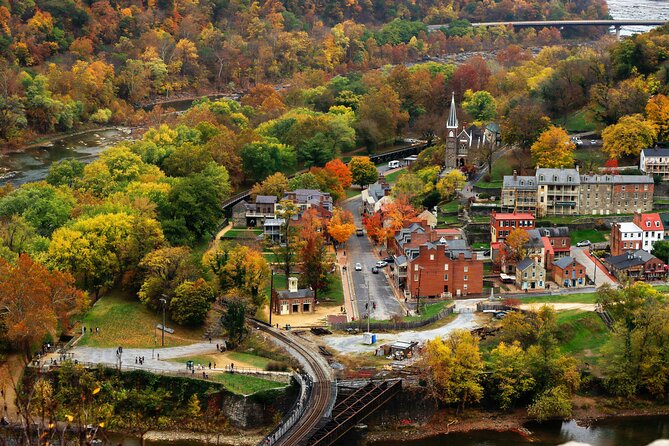
Your meeting point is Lower Town Train Station, 182 Potomac St, Harpers Ferry, WV 25425. The station is still active, so expect real-life transit energy around you—not a dead museum set.
Here’s my practical walking advice:
- Plan to do this as a linear loop from Lower Town up to the overlooks and back toward the trail connections.
- Wear shoes with solid grip. Harpers Ferry has slopes, stairs, and cliffside paths, and you’ll appreciate footing when the route steepens.
- If you’re sensitive to uphill stretches, be aware that the tour includes the Appalachian Trail staircase, which is steep and scenic but not “gentle.”
Also, the tour runs 8:00 AM to 8:00 PM, and it’s available across the stated dates (07/31/2025–03/06/2027). That gives you flexibility: morning for fewer crowds, later afternoon if you want softer light on the overlooks.
Stop-by-stop: river views, abolition, and the town’s fault lines

Below is what you can expect at each major stop, plus what to look for—and what might trip you up.
Stop 1: Appalachian Trail Conservancy Headquarters (Appalachian Trail midpoint)
This is a smart opener because it frames Harpers Ferry as a living crossroads of long-distance hiking. You’re at the symbolic midpoint of the Appalachian Trail, and the space honors the hikers who keep the trail culture moving.
Look for ways the building and exhibits connect the town to the trail story. If you’re walking the staircase later, this stop gives context for why that connection matters.
The African Americans in Harpers Ferry museum (closed for renovations)
Right after that, the route points you to a museum focused on African Americans in Harpers Ferry—covering enslaved, freed, educated, and resilient stories. Important: this museum is currently closed for renovations.
What to do with that information: don’t build your expectations around inside exhibits here. Let it be a reminder that the tour theme is broader than Civil War drama; it includes hard human stories that deserve attention, even when a specific venue isn’t operating.
Stop 2: Harper Cemetery
This is a high, quiet spot with sweeping views. The cemetery gives you a different kind of perspective—less about reenactment and more about endurance. You’re also placed above town, so the landscape helps you understand why places like this mattered for both settlement and safety.
If you want a moment to reset your focus after more intense historical sites, this is where it works.
Stop 3: US Armory Site (foundations and the John Brown raid connection)
Once a major weapons factory, this area became a flashpoint connected to John Brown’s raid. Today, you’re left mainly with foundations, which can be less visually dramatic than fully restored buildings—but that’s part of the point.
To get value here, slow down. Foundations force you to imagine scale. Your audio guide helps you see what the site used to do.
Stop 4: Harpers Ferry Historical Museum (Lower Town)
Tucked into an older building in Lower Town, this museum offers hands-on exhibits and a mix of artifacts. It’s a good “add depth” stop—especially if you’ve been mostly outdoors so far.
If you prefer to spend more time learning and less time walking, you might use this as a pacing anchor.
Stop 5: Jefferson Rock (iconic cliffside view)
Named for Thomas Jefferson, this perch is about the view as much as the name. From here, you can understand how the town’s geography set the stage for trade, conflict, and movement.
Treat this as your photo break—but also as your orientation moment.
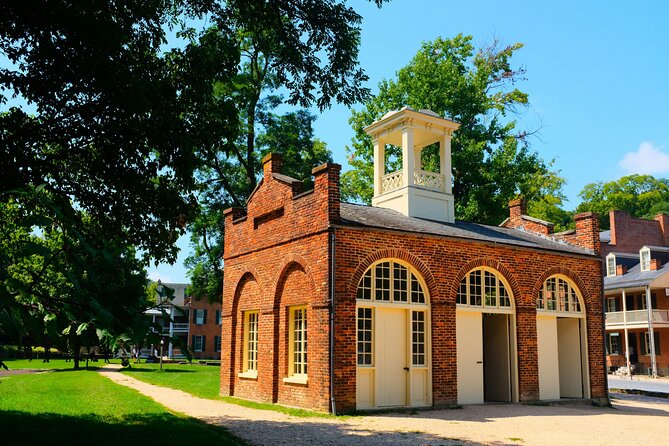
Stop 6: John Brown’s Fort
This modest brick building is tied to abolitionist tension and John Brown’s final stronghold. Even without grand scale, it carries weight because the structure reflects a small space filled with intense stakes.
If you like your history to feel human-sized rather than epic, this is one of the most emotionally focused stops.
Stop 7: Lockwood House
This stately home had multiple roles, used by Union officers and educators, and it ties into the leadership of Storer College. This is where you see that the story doesn’t only swing between battles; it also swings toward education and training.
If the “war only” framing bores you, this stop adds balance.
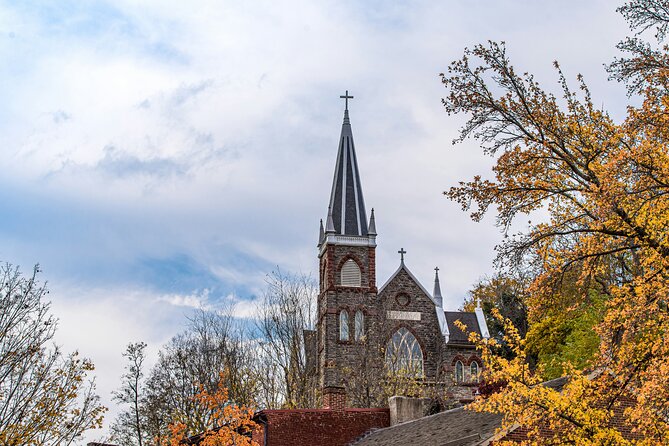
Stop 8: St. Peter’s Roman Catholic Church
This stone church overlooks the town from a dramatic hillside perch. It connects to Irish immigrant families and notes that the church was spared during the Civil War.
From this viewpoint, you can feel how communities held together on slopes and ridges—places where religion and daily life weren’t separate from survival.
Stop 9: Storer College Campus
Founded after the Civil War to educate formerly enslaved individuals, Storer College is central to the town’s postwar hope and progress. This stop is about learning, leadership, and Reconstruction-era civil rights.
What to look for: the campus setting helps you understand how education became a deliberate future-building project.
Stop 10: The Point (Potomac and Shenandoah Rivers meet)
This is the “where land explains everything” stop. The Point is the meeting place of the Potomac and Shenandoah Rivers, and the audio context is especially useful because the rivers explain why Harpers Ferry mattered for trade and strategy.
If you want one place to stand and do nothing, do it here.
Stop 11: Virginius Island (ruins, trails, water-powered economy)
Virginius Island is now a peaceful woodland with ruins and trails. It was once a bustling industrial village, and the story connects to Harpers Ferry’s water-powered economy.
This stop can feel quietly haunting: moss-covered remains plus the sense of what used to run here. It’s a good reminder that industry and conflict often lived side by side.
Stop 12: White Hall Tavern
A 19th-century tavern setting turns history into social life: travelers, locals, and Union soldiers. This kind of stop matters because wars and laws don’t only happen in official buildings—they happen in conversations.
Expect a slower feel here. Use it if you like historical “everyday” scenes.
Stop 13: Murphy Farm
Murphy Farm offers panoramas, but the past here is turbulent. It’s described as a battlefield and later a place for powerful Civil Rights speeches.
This stop is useful if you want the tour to reach beyond the Civil War era. You’re reminded that battles and rights movements are connected, not separate chapters.
Stop 14: Bolivar Heights (a fought-over ridge overlook)
Bolivar Heights is one of the most contested ridges in Civil War history. The overlook is about more than scenery—it’s about strategy.
If you’re imagining movement and positions, this is where you’ll use your brain the most. Stand, look, and let the audio explain why the ridge mattered.
Stop 15: Harpers Ferry Public Square (town heart)
The public square is where markets, militias, protests, and parades have unfolded over time. It keeps the tour from becoming only “battlefield tourism.”
If you’re energized by people-and-power stories, spend a little extra time here.
Stop 16: Lower Town Train Station (rail legacy reminder)
This is the connection back to the region’s rail story. The station is still active, so you get a living reminder that Harpers Ferry was once a major transit hub.
It’s also a good “wrap-up” emotional stop because trains symbolize movement and escape as much as arrival.
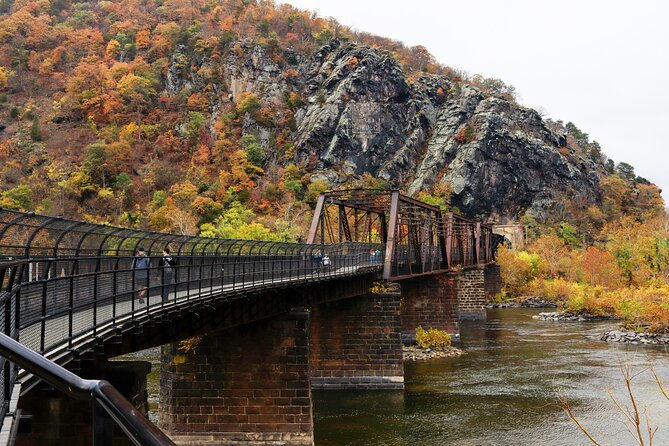
Stop 17: Original Site, Shenandoah River Bridge (Robert Harper’s ferry)
This is where the town’s beginning is tied to Robert Harper and an 18th-century ferry crossing. From a narrative standpoint, it’s a powerful anchor: you’re tracing how a crossing turned into a national crossroads of commerce and conflict.
Look at the river area and try to picture the shift from ferry point to settlement.
Stop 18: Appalachian Trail Staircase (Lower Town to the trail)
Carved into the cliffside, this staircase connects Lower Town to the Appalachian Trail. It’s steep, scenic, and it drives home the effort hikers accept.
This is the one part where your comfort level matters most. If you choose to skip or take it slower, do it here—not midway through the hardest section.
Stop 19: Arsenal Square (charged, quiet, and tied to the raid)
Once the site of a sprawling U.S. arsenal, Arsenal Square witnessed explosive beginnings connected to John Brown’s raid. Today, it’s quieter, but that quiet can feel heavy.
If you like contrasts—quiet present with tense past—this is a strong closer.
How the audio tour app helps (and where it can annoy you)
The audio experience includes:
- an app and tour download
- audio guide content
- mobile ticket
- unlimited access
Because cell service can be unreliable, I strongly suggest you download the tour before you arrive. Treat it like you’re starting a “no-signal” day.
On the experience side, the audio is designed to recognize where you are and provide information when you reach certain places. That’s a big deal for pacing. One more practical tip: if you want the story to flow well, start in the recommended order. Yes, you can technically begin from other locations, but the narrative is built to connect earlier stops.
There’s also real feedback that the app interface could be clearer—especially the map view and the starting experience from other points. The best workaround is to start at Lower Town Train Station and use the map button that returns you to it when you get turned around.
What this tour feels like in real time: pacing, effort, and your attention span
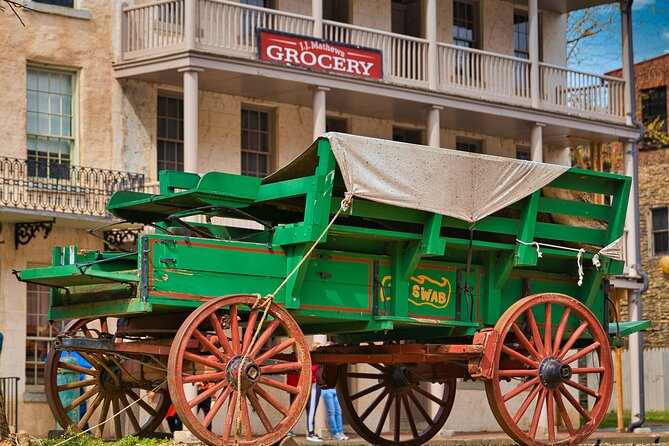
This isn’t a “sit and learn” museum day. You’re walking a historic corridor with frequent short stops—most listed stops are around 5 to 10 minutes, so you’re constantly switching from view to audio to viewpoint.
That format works if:
- you like short stories at each landmark
- you want to keep moving without rushing
- you enjoy figuring out geography while the audio gives context
It’s less ideal if:
- you need a lot of vehicle support (there’s no mentioned trolley option)
- you’re avoiding steep climbs
- you dislike app-based navigation and prefer printed maps
Based on the route shape, I’d mentally budget energy for the uphill moments and make sure your shoes match the terrain.
Who should book this audio walk?
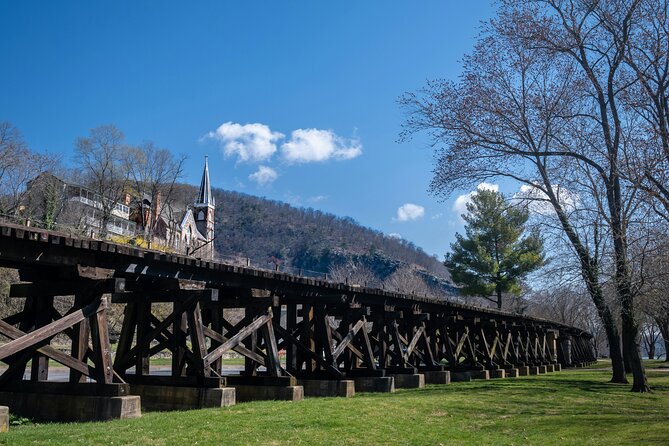
This tour is a strong fit for:
- solo travelers or couples who want flexibility
- history fans who like Civil War and abolition stories tied to real places
- hikers-lite readers who want the Appalachian Trail connection without a full hike
- people who enjoy river views and geography-based history
If you’re traveling with friends who have different interests—battle sites for one person, education and Reconstruction for another—this route gives each of you something to latch onto.
And because it’s private for your group, it works well when you want quiet focus rather than group herding.
Should you book Harpers Ferry Audio Tour History, Ruins and River Views?

Yes, I’d book it if you want a practical, value-minded way to understand Harpers Ferry without paying for a formal guided group. For $9.99 and about two hours, the payoff is the way the audio makes each stop click—especially at John Brown’s Fort, The Point, and the high ridges.
Just go in with the right expectations: bring your smartphone, download before you arrive, wear good shoes, and remember one museum stop tied to African American stories is closed for renovations. If you can handle that, you’ll walk away with a sharper sense of how rivers, rail, industry, and civil rights struggles shaped this place.
FAQ
How much does the Harpers Ferry audio tour cost?
It costs $9.99 per person.
How long is the tour?
The tour takes about 2 hours.
Do I need to bring a smartphone?
Yes. The tour says smartphone (bring your own) is needed, along with downloading the app and tour before you go.
Is the tour in English?
Yes, it’s offered in English.
Where do I start the tour?
The start point is Lower Town Train Station, 182 Potomac St, Harpers Ferry, WV 25425. The tour ends back at the meeting point.
Do I need cell service during the tour?
You should download before you go, because cell service is spotty at best.
Are there admission fees for stops?
The stops listed show admission ticket free for the attractions included in the itinerary.
Can I cancel for a full refund?
Yes. It offers free cancellation, and you can cancel up to 24 hours in advance for a full refund.
Is it a private tour?
Yes. It’s described as a private tour/activity where only your group participates.
Are children free?
Yes. Children 10 and under are free.