REVIEW · SHANGHAI
4-Hr Shanghai Tour: Food, Culture, Sightseeing, Cycling, Ferry
Book on Viator →Operated by iTour Shanghai · Bookable on Viator
Shanghai hits different from the water and the bike seat. This 4-hour tour mixes Lujiazui skyline views, a Huangpu River ferry, and hands-on culture stops like Xiahai Temple, City Mart snacks, and an ethnic tea ceremony. The one thing to keep in mind is that the pace includes some cycling and walking, so you’ll want comfortable shoes and to handle heat and traffic thoughtfully.
I love the way the route gives you both old Shanghai texture and the city’s constant rebuilding, all without turning the day into a museum marathon. I also like that the tour bundles real “local life” moments—tea etiquette and neighborhood snacks—rather than only chasing famous views.
If you’re expecting every ticket to be included, note that Shanghai Tower admission is optional and not included (CN¥180). It’s still a great add-on if you want the full skyline payoff.
In This Review
- Key highlights at a glance
- Why this 4-hour Lujiazui-to-North-Bund loop is so smart
- Starting in Lujiazui: Shanghai Tower views and skyline orientation
- Huangpu River ferry ride: nostalgia with cranes in the frame
- Xiahai Temple: a calm cultural pause with sea-goddess roots
- Raffles City Mall and City Mart: snacks in a restored Shanghai setting
- North Bund tea ceremony: learning etiquette, not just drinking tea
- Hongkou cafe stop: a short pause with a local-view lens
- Food and cycling logistics: what you’ll actually feel during the day
- Price and value: $93 with optional upgrades that make sense
- Who should book (and who might want a different plan)
- Should you book this 4-hour Shanghai Highlights tour?
- FAQ
- FAQ
- How long is the tour?
- What does the $93 price include?
- Is Shanghai Tower entry included?
- What are the main stops on the route?
- Where does the tour start and end?
- Is the ferry ride included?
- Are there any age requirements?
- Are bicycles provided, and what kind are they?
- Can I bring a service animal?
- What happens if the weather is poor?
Key highlights at a glance
- Bike + walk balance: You get moving city views without spending the whole day on foot.
- Huangpu ferry nostalgia: A commuter-style ride with skyline views and cranes.
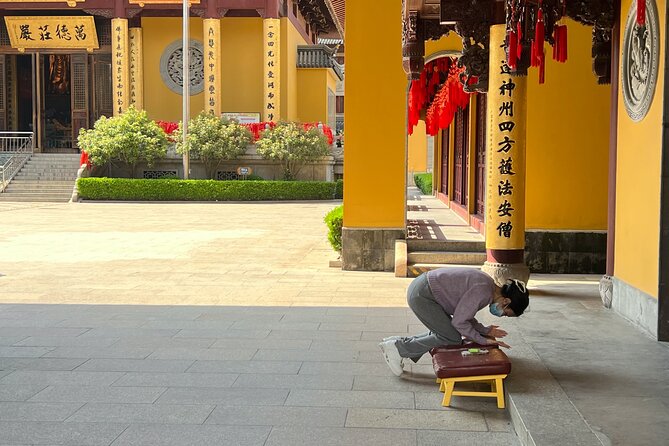
- Xiahai Temple stop: Traditional architecture and Mazu-related heritage.
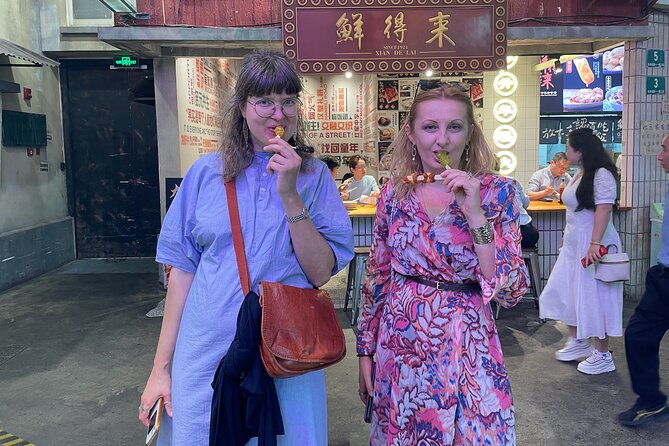
- City Mart bites & sips: Signature snacks from a restored shopping setting.
- North Bund ethnic tea ceremony: Tea etiquette and customs you can actually watch and learn.
- Compact ending in Hongkou: A short café break near iconic sights, for a softer landing.
Why this 4-hour Lujiazui-to-North-Bund loop is so smart
This is a fast, focused way to orient yourself in Shanghai. You start in Pudong’s Lujiazui (right by the metro), then you cross the river via a ferry, and you wrap up on the North Bund side in Hongkou. That change of neighborhoods matters. Shanghai can feel like one big blur if you only use taxis and one-line bus routes.
The tour also does a nice job with variety. You’re not just seeing landmarks—you’re getting a practical mix of city views, food, a temple, and tea culture, with transport built in (bike, ferry, and subway).
The cycling component is urban and time-efficient. Shared bikes are provided, but it’s still your responsibility to ride safely and choose a comfortable pace if you’re not a confident cyclist.
You can also read our reviews of more tours and experiences in Shanghai.
Starting in Lujiazui: Shanghai Tower views and skyline orientation
You begin at Lujiazui Metro Station and head to the Shanghai Tower area for the first stop. The main value here is orientation. Even if you skip the optional observation deck, you’re still in the right place to understand how the modern skyline is laid out and why Lujiazui is the city’s visual “center of gravity.”
Optional: Shanghai Tower admission (not included). If you pay for the deck (CN¥180), you’ll get a classic, high-level skyline panorama. It’s the kind of view that helps everything else click later—river bends, building clusters, and the contrast between older districts and the construction boom.
A practical note: this stop is about getting oriented, not just standing in a line. Wear sun protection if you’re coming in warm weather, and bring a layer you can handle when you move between shaded areas and exposed streets.
Huangpu River ferry ride: nostalgia with cranes in the frame
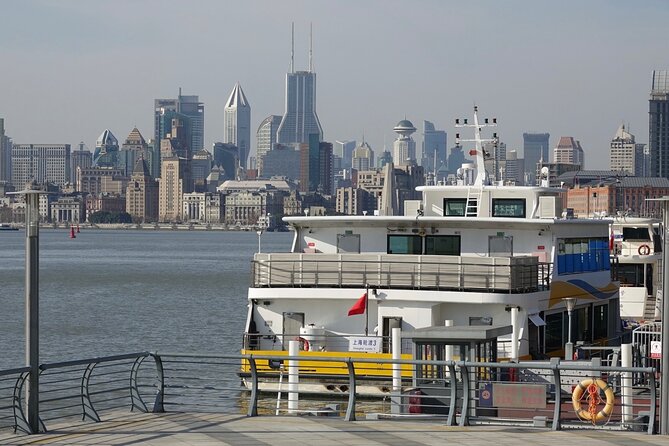
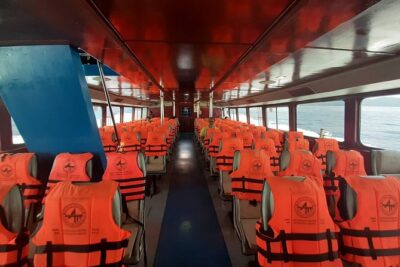
Next up is the Huangpu River ferry ride, and it’s included. This is where the tour turns from “photo run” into “real Shanghai rhythm.”
The ride is described as a commuter-style experience, and that feel is the point. You don’t just see the skyline; you see it the way people move through the city. You also get the skyline contrast: newer hotels and office towers with construction cranes perched above them. That combination is very Shanghai—progress happening right next to daily life.
It lasts about 45 minutes, long enough to settle in, but not so long that you lose the momentum of the afternoon. If you tend to get travel-weary, the ferry also offers a natural reset between the big visual moments.
Tip for comfort: bring water habits in mind. One bottled water per person is included, but you’ll still want to sip steadily if it’s hot.
Xiahai Temple: a calm cultural pause with sea-goddess roots
Then the tour shifts gears to Xiahai Temple, also known as the Temple of the Sea. This is one of those stops that’s brief but meaningful because it gives you a different tempo.
You’re there for traditional architecture and the temple’s cultural heritage tied to Mazu, a sea goddess believed to protect fishermen and sailors. Even if you don’t know the backstory, the atmosphere makes sense. Temples like this don’t just look old—they show you what people built their daily meaning around.
This stop runs about 35 minutes with entry included. That time is right for a calm walk, a look at the details, and a bit of mental breathing room before you head back into shopping-street energy.
What to watch for: don’t rush. The value here is in slow observation—materials, layout, and the way the temple context feels different from modern streets.
Raffles City Mall and City Mart: snacks in a restored Shanghai setting
After the temple quiet, you’ll head to Raffles City Mall, where the tour makes a smart move: it connects modern retail space to Shanghai’s preservation efforts.
This is where City Mart comes in. The tour frames it as a “carefully restored” area that protects remaining historic homes and shops as heritage sites. Instead of treating history like a theme park, you’re seeing history folded into a present-day shopping street.
You’ll also taste signature snacks as part of the tour’s food portion (it’s bundled as bites & sips). This is the kind of stop that pays off even if you don’t consider yourself a foodie. You get local flavors, and you learn how everyday eating fits the neighborhood story.
One small drawback to consider: mall zones can feel crowded and indoor lighting can make photo-taking tricky. If you care about photos, plan on quick shots and save longer attention for the snack moments and any quieter corners.
North Bund tea ceremony: learning etiquette, not just drinking tea
This part is a standout because it’s not only a tasting. It’s a lesson in tea culture etiquette and how locals treat tea as a social ritual.
The tour ends up in the North Bund area for about 35 minutes. Tea is framed as a main social drink, and you’ll learn customs tied to ethnic tea culture—how tea is served, how it’s received, and the manners around it.
This is included in the tour as an ethnic tea ceremony, with bites & sips and a bottled water per person. The gift here is that tea stops can be touristy elsewhere, but this one is more about the behavior and social meaning.
Practical advice: the tour notes you shouldn’t eat excessively before you go. That makes sense, because tea tastings and snack portions work best when you’re not too full to enjoy the flavors.
If you’re sensitive to caffeine or tea strength, you can ask your guide about how the tasting is structured when you book, since dietary and comfort considerations are something the tour invites you to share in advance.
Hongkou cafe stop: a short pause with a local-view lens
The last stop is Hongkou, with a brief 20-minute café visit. The whole point is to give you a different perspective—something intimate, near iconic landmarks, but not as “big attraction” as the skyline or temple.
This is a great ending strategy. After ferry, temple, snacks, and tea, your brain deserves a softer moment. A café stop also gives you time to check your map, recharge your phone, and process what you saw.
Admission is free for this part. That’s good value for a quick break.
Food and cycling logistics: what you’ll actually feel during the day
Here’s the honest picture of the experience: it’s paced like a city tour that wants you to move.
You’ll rely on public transport (bike/ferry/subway) during the day. The bikes are provided as urban shared bikes, so expect typical shared-bike behavior: quick check of the fit, a brief learning moment if you haven’t used them before, and ride responsibly with traffic and pedestrians.
The best-reviewed part of the tour is the balance—people seem to like the mix of walking and cycling along Shanghai’s highlights, even in high temperatures. That doesn’t mean the heat is irrelevant; it means the timing and route keep it from feeling like one long slog.
So plan like this:
- Wear comfortable shoes you can walk in for short stretches.
- Use sun protection and carry a small amount of water if you’re the type who drinks often.
- If you’re not confident cycling, take it slow and ask the guide for guidance before you start.
Also, keep an eye on timing. The guide won’t wait more than 10 minutes after the scheduled start. If you want a stress-free morning, show up early at Lujiazui Metro Station.
Price and value: $93 with optional upgrades that make sense
At $93 per person, this tour is priced as a “bundle day.” You’re not just paying for a guide; you’re paying for transport coordination plus several included cultural and food components.
What you get included:
- Private English-speaking guide service for your group
- Entry ticket to Xiahai Temple
- Ethnic tea ceremony
- Bites & sips (snack/tea-style tasting) plus one bottled water
- Public transport support (bike, ferry, and subway)
What’s not included:
- Shanghai Tower admission (optional, CN¥180)
Value logic: you’re effectively buying convenience and coherence. Shanghai is big, and hopping between the skyline side, the river, and older cultural stops takes planning. This tour packages that movement and gives you more than one “why am I here?” moment: you get views, a temple context, neighborhood food, and tea etiquette.
If you’re the type who already plans to pay for multiple attractions and would rather not manage tickets and connections, the bundle feel is a win. If you only care about one skyline deck and skip everything else, you may not feel the value as strongly.
Who should book (and who might want a different plan)
This tour suits you if:
- You want a fast orientation to Shanghai in about four hours
- You like a mix of skyline + culture + food + tea
- You’re comfortable with short rides and short walks
- You want an English-speaking guide to help connect the dots
This tour may be less ideal if:
- You strongly dislike cycling or feel unsafe around bikes
- You’re looking for a long, sit-down museum-style itinerary
- You expect all major tower admissions to be included (Shanghai Tower is optional)
It’s also a good match for first-timers who want an experience that feels local without needing hours of independent research.
Should you book this 4-hour Shanghai Highlights tour?
If your goal is to understand Shanghai quickly—modern skyline, river life, temple culture, and tea manners—this is an easy yes. The best parts are practical: the bike + walk rhythm, the ferry ride that shows the city in motion, and the cultural add-ons that don’t feel like filler.
I’d book it if you’re happy doing a few short transitions and want a guide to keep the day coherent. Pass if you want everything fully ticketed from the start or you’d rather avoid shared bikes.
FAQ
FAQ
How long is the tour?
The tour is about 4 hours.
What does the $93 price include?
It includes a private English-speaking guide, public transportation support (bike/ferry/subway), entry to Xiahai Temple, an ethnic tea ceremony with bites & sips, and one bottled water per person.
Is Shanghai Tower entry included?
No. Shanghai Tower admission is optional and not included (CN¥180 per person).
What are the main stops on the route?
You’ll visit Shanghai Tower (optional deck), the Huangpu River ferry, Xiahai Temple, Raffles City Mall/City Mart snack area, the North Bund tea stop, and a short café stop in Hongkou.
Where does the tour start and end?
It starts at Lujiazui Metro Station in Pudong and ends in Hongkou District at the North Bund area (postal code 200086).
Is the ferry ride included?
Yes. The ferry ride is included, with admission/ticket included for that segment.
Are there any age requirements?
If you are under 16, you must be accompanied by a parent or guardian.
Are bicycles provided, and what kind are they?
Yes. Urban shared bikes are supplied.
Can I bring a service animal?
Yes, service animals are allowed.
What happens if the weather is poor?
The experience requires good weather. If it’s canceled due to poor weather, you’ll be offered a different date or a full refund.