REVIEW · SEATTLE
From Seattle: Round Trip by High Speed Ferry to Victoria, BC
Book on Viator →Operated by FRS Clipper · Bookable on Viator
A quick ferry can beat a whole drive. This Seattle to Victoria round trip is a time-saver that drops you at Victoria’s Inner Harbour right in the city center, after a smooth cruise through Puget Sound and the Strait of Juan de Fuca. You meet at Pier 69 in downtown Seattle, clear border checks, then settle in for the ride.
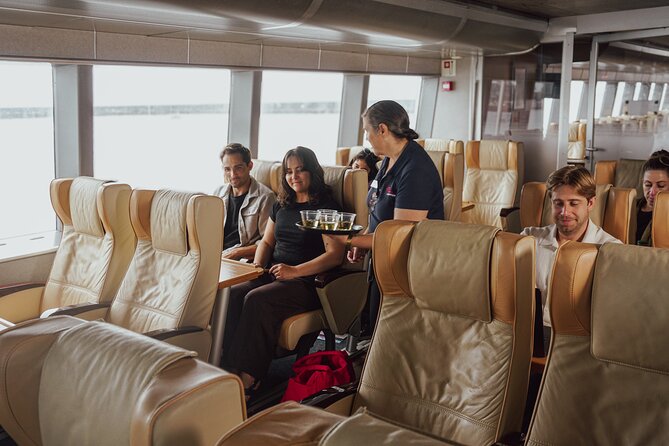
I really like the roomy, comfortable economy seating (with extra legroom) and the fact that some seats even have small tables, so you can enjoy your own purchased snacks at your seat. I also like the onboard café and duty-free shop, which gives you practical things to do while you’re crossing and helps the trip feel like more than just transportation.
One drawback to plan around: timing can feel tight. It’s listed at about 3 hours each way, but real-world sail times vary, so a day trip can turn into less time on land than you hoped.
In This Review
- Key things to know before you go
- Pier 69 Check-In: Border Rules and What to Bring
- The Smooth High-Speed Ride: Puget Sound to Strait of Juan de Fuca
- Onboard Life: Café, Duty-Free, and Seat-Friendly Meals
- Docking in Victoria’s Inner Harbour: Start Walking Fast
- Timing Reality Check: Why Day Trips Can Feel Short
- What You Pay For (and Where You’ll Spend More)
- Who This Ferry Suits Best
- Crew and Service: Friendly Help That Matters
- Should You Book This Seattle to Victoria High-Speed Ferry?
- FAQ
- Where do I meet for the Seattle to Victoria ferry?
- How long is the ferry ride?
- Do I need a passport to cross into Canada?
- Is food included on the ferry?
- Can I bring checked luggage?
- Are cars allowed on this ferry?
- Is there an upgrade option from economy seating?
- Can I cancel and get a full refund?
Key things to know before you go
- Pier 69 departure to downtown Victoria docking means you can start exploring the minute you arrive
- Roomy economy seating with extra legroom, plus occasional table seats
- Café and duty-free on board keep you fed and entertained without leaving the ship
- Border ID rules are strict, so have your documents ready before boarding
- Crossing times can vary with day and conditions, affecting day-trip plans
- Passenger-only ferry with carry-on limits means pack light for an easy trip
Pier 69 Check-In: Border Rules and What to Bring
This starts in downtown Seattle at 2701 Alaskan Way, Pier 69. Aim to arrive one hour before departure. That extra buffer matters, because you’ll need to get through ID checks before you even step onto the ferry.
You’ll need Real ID or a passport for the border crossing. For travel by land and sea, a US Passport, Passport Card, Enhanced Driver License, or Enhanced ID Card (EDL/ID) is required. If you ever mix this trip with air travel, note that Passport Card/EDL-ID are not valid for air travel, so don’t get surprised later.
Bring a carry-on only if you can. You’re allowed 1 small carry-on, and checked luggage costs $20 per piece each way. If you’re traveling with more than one bag, start thinking about that fee now rather than at the dock.
A few other practical points from the provided rules: this is service-animal friendly, and it’s a passenger-only ferry (no autos). Bikes and dogs are restricted, so if you need either, you must advise at booking. And yes, border entry rules can be serious for some travelers, including felony-related restrictions and the note that a DUI is considered a felony in Canada.
You can also read our reviews of more tours and experiences in Seattle.
The Smooth High-Speed Ride: Puget Sound to Strait of Juan de Fuca
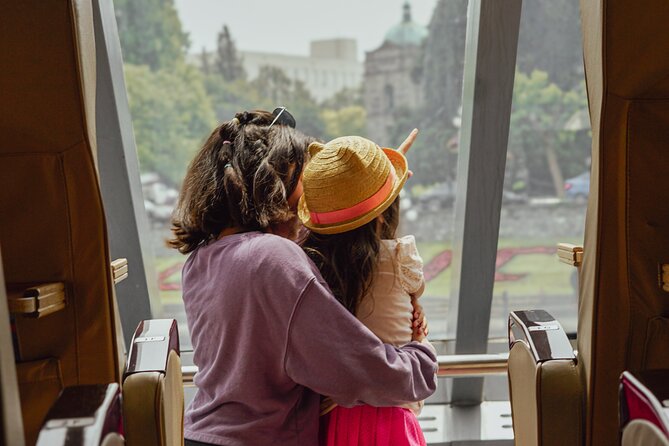
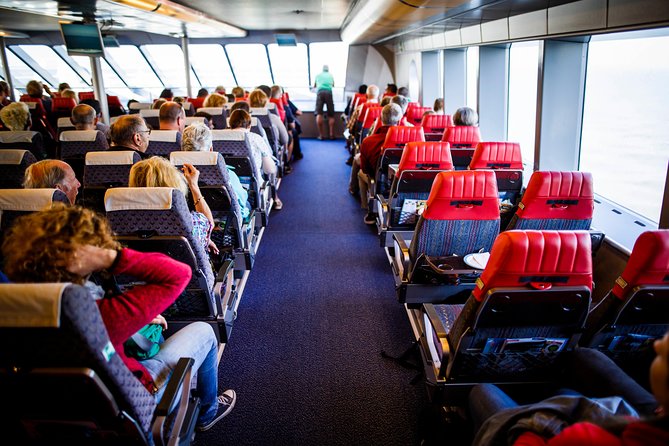
Once you board, you’ll likely feel the difference between this and sitting in a car for hours. The ride is designed to be relaxing: you get economy seating, and the reviews back up that the seats feel comfortable and not cramped, with decent legroom.
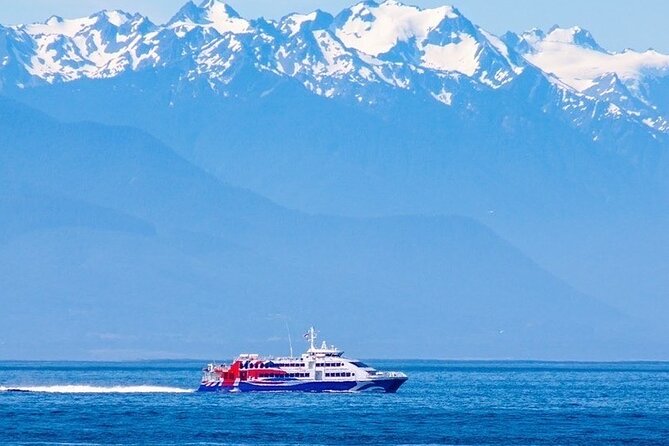
Crossing goes through Puget Sound and onward toward the Strait of Juan de Fuca. You’ll pass a lot of water and coastline, and you can step out on deck if weather allows. Even when the view is “just” open water, it’s a nice mental switch from driving stress.
A small tip I’d follow: bring a layer. One passenger noted the ferry temperature ran a bit cold. On a moving ship, that can feel extra chilly, especially if you’re sitting still for the full crossing.
Also, choose your seat with how you want to spend the ride in mind. Some seats have tables, which is great if you plan to buy food or a drink and want to eat without balancing everything on your knees.
Onboard Life: Café, Duty-Free, and Seat-Friendly Meals
This ferry is not a guided tour with planned stops. It’s more like a well-supported transit day, which is good. You get time to settle in, and you don’t lose your whole day waiting in lines at multiple places.
On board, there’s a café where you can purchase food and beverages. You can also shop duty-free for gifts and souvenirs. Because meals aren’t included, it’s worth planning lightly: if you have strong food preferences, eat before you board or be ready to buy something simple on the ship.
I like the value here: you’re paying for transportation and seating, not for an included buffet you might not want. The café and duty-free option means you can still make the crossing feel like part of the day instead of just sitting quietly.
If you want an extra upgrade, Comfort and Vista Class seating is available. The details say to contact Clipper Vacations for pricing and availability. One report shared that a $20 upgrade got someone into Vista upstairs seating, but upgrades and prices can change by sailing—so treat that as an example, not a guarantee.
Docking in Victoria’s Inner Harbour: Start Walking Fast
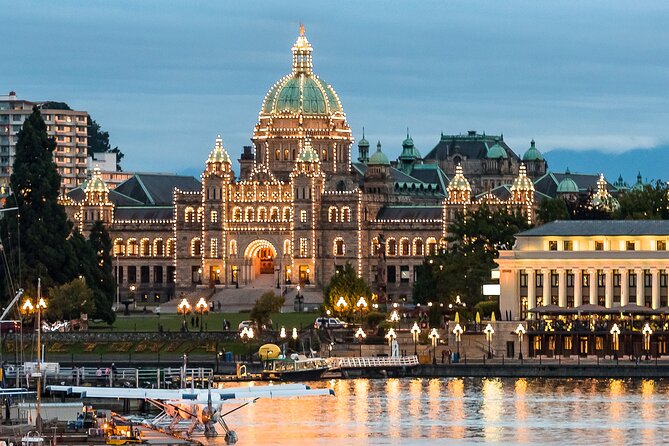
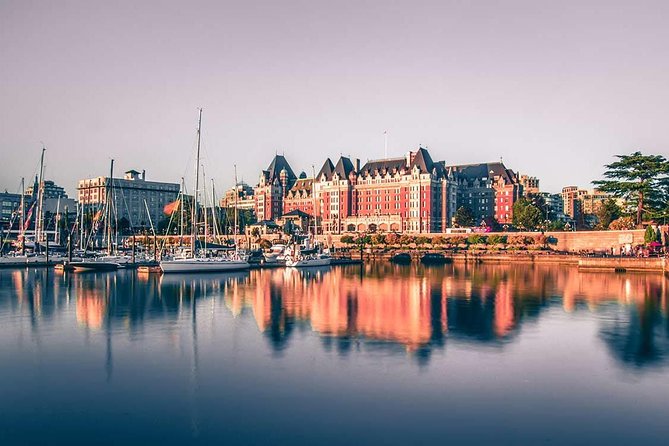
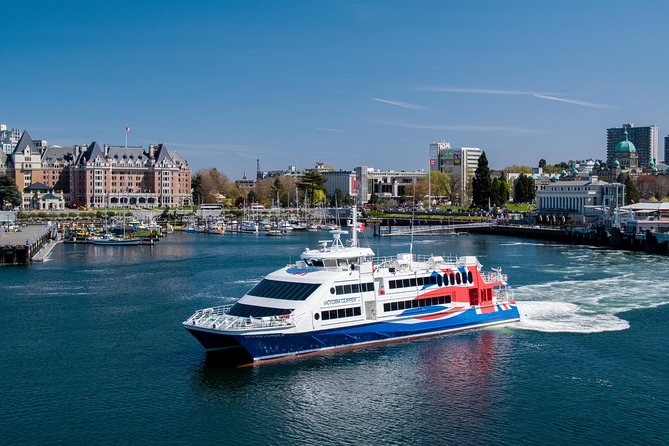
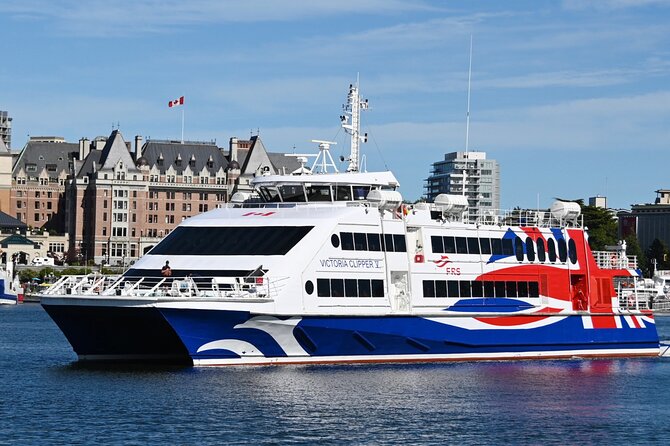
Arrival is the big payoff. The ferry docks at Victoria’s Inner Harbour, right in the center of downtown. That’s the difference between a day that feels smooth and a day that feels like transportation chores.
From the moment you step off the boat, you can start moving: walk streets, duck into shops, find a café or pub for lunch, and use the time you have without needing extra transit just to reach the main areas. If you like shopping, you’ll find plenty to keep you busy around the waterfront core.
Even though this is “just” transportation, it can still feel like a mini-mission: you’re arriving in a compact, walkable spot. People also pointed out that Victoria can easily fill more than one day. If you’re the type who hates rushing, the best move is often to add a second night so you’re not counting minutes until ferry return.
One other fun possibility: you might see wildlife from the water. A passenger described spotting a pod of orcas during the crossing and slowing down for photos. Of course, that’s not something you can schedule. But it’s the kind of unexpected moment that makes the ride memorable.
Timing Reality Check: Why Day Trips Can Feel Short
Here’s the truth: the ferry is scheduled at about 3 hours each way, but it’s not always exact. The details explicitly say departure times vary by day of week and season, and some reports in your provided info describe longer actual travel times.
So when you plan a day trip, build in margin. You need to be back at the dock before your departure time, and disembarking also takes time—especially if you’re traveling during busy periods.
If you’re trying to pack a long checklist into one day in Victoria, I’d set expectations early:
- You’ll want a rough plan for what you want to do first after you arrive
- You should assume you’ll lose some time to rain, walking breaks, or just the fact that downtown is easy to wander
- Tours and attractions often have their own hours, so check schedules before you commit
A simple rule: don’t treat this ferry like it gives you a whole 8-ish hours in Victoria if you’re doing a far-away activity. It’s better to think of it as a smooth way to reach downtown plus a flexible day, rather than a guaranteed “see everything” ticket.
If your trip dates allow it, staying overnight in Victoria is often the smarter play. Multiple people noted that one day isn’t enough to see everything, and it’s true: you can return to the waterfront at a slower pace, or fit in the “one more thing” that always seems to pop up.


What You Pay For (and Where You’ll Spend More)
At $192 per person for round trip, you’re buying a straightforward value: a round trip ferry ride plus the fees that keep the service running. Included items are listed clearly:
- Round trip ferry transportation from Seattle to Victoria
- Fuel surcharge, port fee, and security fee
- Carry-on luggage
- Economy seating
That means you’re not doing the cost math for parking, fuel, or multiple tickets for different segments. You’re also avoiding the stress of driving and parking downtown both ways, which can be a quiet but real savings in time.
Where you’ll likely spend extra:
- Food and beverages are not included, though you can buy them on board
- Checked luggage costs $20 per piece each way
- Upgrades to Comfort and Vista Class cost extra (pricing is handled by the provider)
If you pack light and eat flexibly (cafés on the island and café options on board), this stays a good deal. If you bring lots of bags, drink heavily on the ship, or need multiple upgrades, the final price climbs fast. Plan for that and you’ll feel good about the value.
Who This Ferry Suits Best
This trip fits best when your goal is simple: get from Seattle to Victoria without a long drive and drop into the downtown core fast.
You’ll probably enjoy it if:
- You want a comfortable, low-effort day trip
- You like water views and an “active transit” day where the ride is part of the fun
- You’re okay with buying food on board rather than having it included
You might think twice if:
- You need a car on the Canadian side (this is passenger-only, so cars and autos aren’t allowed)
- You hate sharing space with families and kids during busy sailings (one provided account described kids running around and creating chaos; it’s not a guarantee, but it can happen on passenger ferries)
- You’re working with a strict schedule and can’t absorb the possibility of timing running long
If you’re sensitive to noise, bring small earplugs. It costs nothing and can save your mood.
Crew and Service: Friendly Help That Matters
A big reason people rate this ride well is the way the ship runs like a workplace that actually cares. The crew is described as friendly and accommodating, and you’ll see that in small moments like directions, boarding assistance, and general good tone.
In the provided feedback, several staff members get called out by name. Hank shows up repeatedly as helpful and welcoming, including assistance for a mobility challenge. Other employees mentioned include Deb, Ashley, and Jessinine, described as personable and knowledgeable, and also the pilot is noted with respect in one account.
That kind of service matters because you’re dealing with logistics: border checks, seating, return timing, and the flow of boarding and disembarking. When the crew is calm and responsive, your day feels calmer too.
Should You Book This Seattle to Victoria High-Speed Ferry?
Book it if you want the most practical version of a Seattle to Victoria trip: downtown to downtown, comfortable seating, and enough onboard amenities to keep the ride pleasant. At $192, the price makes sense when you compare it to the time cost and stress of driving plus the hassle of parking.
I’d book especially if you’re aiming for a flexible day in Victoria’s downtown core and you’re willing to plan around ferry return times. If you want a bigger, slower Victoria experience, consider staying overnight instead of cramming everything into one day.
Skip it (or plan a different approach) if you’re bringing lots of luggage, you need a vehicle in Victoria, or you’re the type who gets stressed when schedules slip. This ferry is smooth, but it’s still the ocean and the Strait—not a perfect clock.
If your goal is a smooth crossing and an easy start in Victoria, this is a strong choice.
FAQ
Where do I meet for the Seattle to Victoria ferry?
You meet at 2701 Alaskan Way, Seattle, WA 98121 (Pier 69). The activity ends back at the meeting point.
How long is the ferry ride?
The duration is listed as about 3 hours (approx.) for the round trip experience timing on the booking details.
Do I need a passport to cross into Canada?
You need documents for the US/Canada border. The information says a US Passport, Passport Card, Enhanced Driver License, or an Enhanced ID Card (EDL/ID) is required to cross by land and sea. It also notes a passport is required for air travel, and Passport Card/EDL/ID are not valid for air travel.
Is food included on the ferry?
No. Food and beverage are available for purchase on board, but they are not included.
Can I bring checked luggage?
Carry-on is allowed (1 small carry-on). Checked luggage is available for a fee of $20.00 per piece of luggage, each way.
Are cars allowed on this ferry?
No. This is a passenger-only ferry service, and autos are not allowed.
Is there an upgrade option from economy seating?
Yes. Comfort & Vista Class seating is available for upgrade. You need to call Clipper Vacations for pricing and availability.
Can I cancel and get a full refund?
Yes. Free cancellation is available up to 24 hours in advance for a full refund. If you cancel less than 24 hours before the start time, you won’t be refunded.