REVIEW · CHONGQING
Chongqing: Trendy Spots, Cableway & Ferry Private Tour
Book on GetYourGuide →Operated by Chillax Tour · Bookable on GetYourGuide
Chongqing works in vertical lines. This private 9-hour tour strings together temple incense, skyline architecture, a glass-cabin cableway ride, and a sunset ferry across the river. You’ll get photos, explanations, and a route that makes sense of Chongqing’s “up and down” city design.
I especially like the balance of old and new: Luohan Temple sits quietly between modern towers, then you’re back out grabbing views from cutting-edge spots. I also like the photo setups that feel tailor-made for the hour—sunset ferry views come with that slow, orange-to-purple lighting shift. The one thing to consider is the pace: you’ll be on your feet for hours, including steep steps and high viewpoints.
If you’re sensitive to heights or heavy walking, plan your day around comfort first. And if you’re visiting on a Monday, note that the Eling Park scenic footbridge is closed for scheduled maintenance.
In This Review
- Key things I’d plan around
- A vertical city, built for big views and short distances
- Hotel pickup and Yuzhong navigation with fewer headaches
- Raffles City Chongqing and the sky-high “crystal corridor” look
- Luohan Temple: incense, chanting, and stone arhats up close
- The cableway ride: the thrill of glass above working river traffic
- Longmenhao Old Street: descend to river steps and restored shophouses
- Nanbin Zhonglou Square: “ground level” that isn’t what you think
- Changjiahui Danzishi Laojie Street: old lanes with photo pauses
- Daijia Lane and Kuixinglou: the cliffside walkway feeling
- Ferry time: sunset on the two rivers and that skyline glow
- Liziba Viewing Platform: the train that passes through a building
- A note on days and comfort: Monday closures and steep steps
- Who this private tour suits best
- Price and value: what $158 is really covering
- Should you book this Chongqing tour?
- FAQ
- How long is the Chongqing private tour?
- What’s included in the price?
- Is lunch included?
- Is the cableway guaranteed?
- What time is the ferry ride?
- Are there any closures to know about?
- What should I bring?
Key things I’d plan around
- Cableway across the river in a glass cabin, suspended high above freight traffic
- Luohan Temple with incense, chanting, and 500 intricately carved stone arhats
- Nanbin Zhonglou Square’s glass-floor drop, plus suspension bridges spanning a 40-meter descent
- Cliffside walkway with iron handrails, where laundry can look like colorful flags far below
- Liziba Viewing Platform’s train-through-building photo, with trains moving through floors 6–8
- Light-customization options, useful if you care about atmosphere and skyline photos
A vertical city, built for big views and short distances
Chongqing is famous for being dramatic, and this tour leans into that reality. You’ll move through a stack of city layers—street level, cliff level, river level, and sky-adjacent levels—without wasting time guessing how things connect. It’s one reason this day feels “efficient” while still giving you stops that are actually worth slowing down for.
Price-wise, $158 per person is trying to buy you time and coordination. You’re not just paying for entry tickets; you’re paying for a guide who helps you hit multiple iconic viewpoints in one day, plus transportation support and the cableway and ferry tickets. It’s a good fit if you want the main highlights without spending your energy on routes and crowd logistics.
Hotel pickup and Yuzhong navigation with fewer headaches
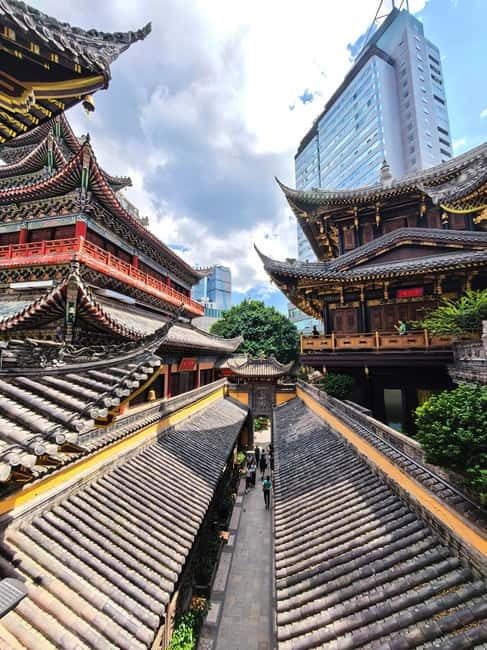
The day starts with pickup in Yuzhong District, then you get moving via subway/metro and short walking segments. This matters because Chongqing’s highlights are spread across steep, connected zones, so your energy gets spent on sightseeing instead of transit puzzles.
You also get a private guide, with English and other language options (English, español, italiano, français, and Traditional Chinese). In practice, that means fewer awkward moments with directions and more time spent understanding what you’re seeing—especially around the more unusual architecture and the cliffside areas.
Raffles City Chongqing and the sky-high “crystal corridor” look
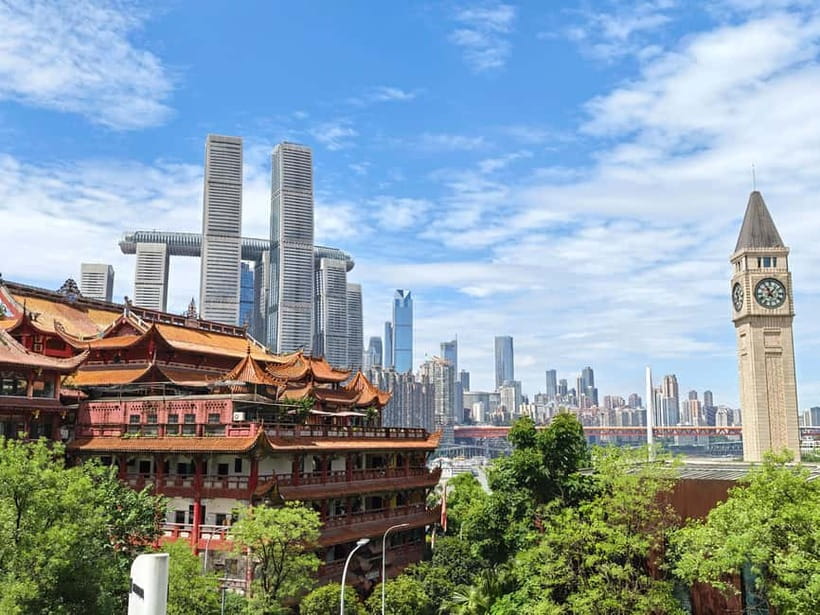
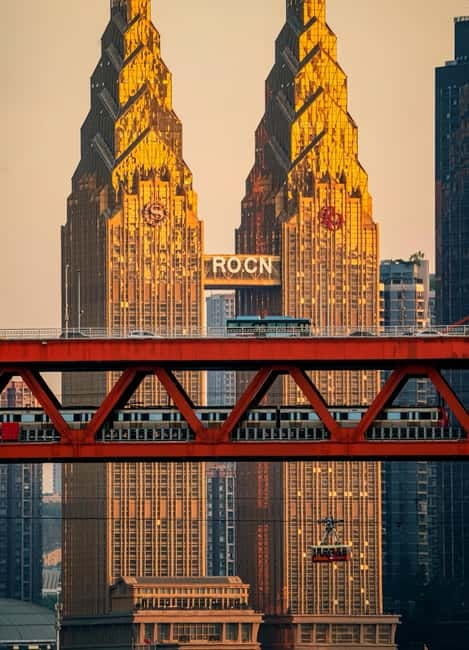
One of the first major stops is Raffles City Chongqing, a place that’s all about modern skyline identity. The standout feature in this area is the eight sail-shaped towers connected by a crystal corridor about 300 meters above ground. If you like photos where the geometry looks almost impossible, this is where you’ll get that wow factor fast.
I like that the day doesn’t toss you into the deep end without context. Your guide’s explanations help you make sense of why this architecture became a recognizable Chongqing landmark—so your photos aren’t just pretty, they also “mean” something.
Luohan Temple: incense, chanting, and stone arhats up close
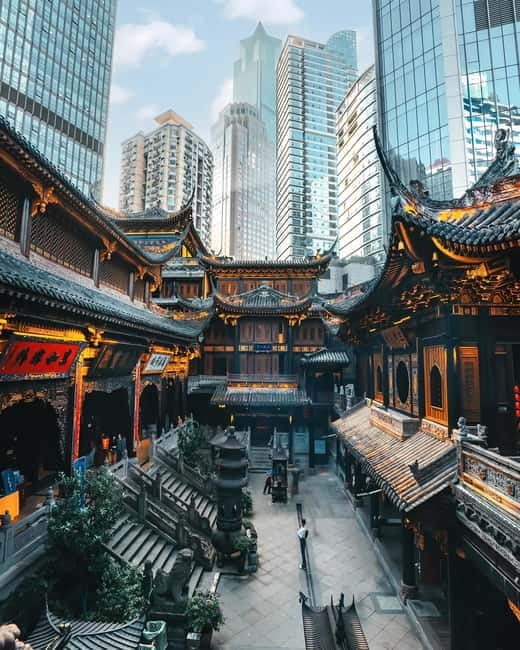
Next comes the Luohan Temple, described as a sanctuary that’s about a thousand years old and tucked between skyscrapers. It’s a sharp change of mood from the modern towers—air changes, sound changes, and the pace slows down.
Inside, you’ll catch sweet incense and monks chanting ancient sutras. Then you’ll see around 500 intricately carved stone arhats, each with unique facial expressions and poses. For me, the value here isn’t only age—it’s the detail. This is the type of site where your eyes keep finding new faces as you move along.
Practical note: keep your shoes comfortable. Temples tend to mean more walking than you expect, and the day later adds more steps.
The cableway ride: the thrill of glass above working river traffic
Then it’s time for the most adrenaline-heavy moment: a one-way river-crossing cableway in a glass cabin suspended by steel cables. You’ll soar across the mighty river while big cargo ships glide underneath. That mix—quiet cabin, fast water, moving ships—creates a layered view you can’t really replicate from ground level.
Yes, it’s high. If you get nervous with heights, this is the point to slow your breathing and focus on the horizon lines. The good news is that the cableway experience is built for views—so even if you’re a little tense, you still get the full picture.
One important comfort detail: the cableway can be cancelled only in real-time situations with huge crowds and long waits, so you get a better overall experience rather than standing in a line all day.
Longmenhao Old Street: descend to river steps and restored shophouses
After the cableway, you’ll descend steep stone steps into a recently restored historical district along the riverbank. This part is great if you want something more than viewpoints—there’s texture: older streets, riverfront spacing, and places that have been converted into shops and cafés.
A highlight here is the mix of restored spaces with modern comfort. You’ll pass converted shophouses now hosting trendier cafés, including traditional tea with modern twists. I like this stop because it gives your legs a break from height anxiety while still keeping you in the action.
Nanbin Zhonglou Square: “ground level” that isn’t what you think
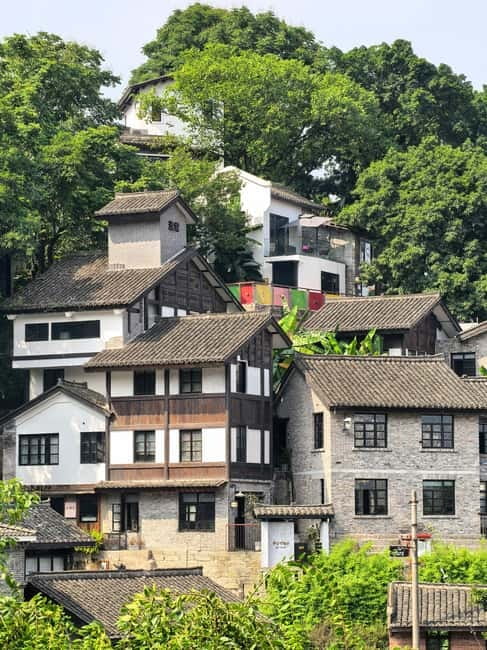
At Nanbin Zhonglou Square, the city plays a mind trick with elevation. You enter from street level, walk across what looks like a regular plaza, and then you’re confronted with a 40-meter drop below. Two suspension bridges span that descent, and you can look down through a glass floor while traffic crawls like tiny cars.
This is the kind of stop that rewards calm attention. Look around before you step close to the glass so your brain can catch up. With the bridges and the height difference, your photos will come out stronger if you take a few seconds to frame what you want rather than rushing forward.
You’ll also notice the tour mentions light-customization options, which is useful for people who care about how the skyline and lighting get captured at the right moment.
Changjiahui Danzishi Laojie Street: old lanes with photo pauses
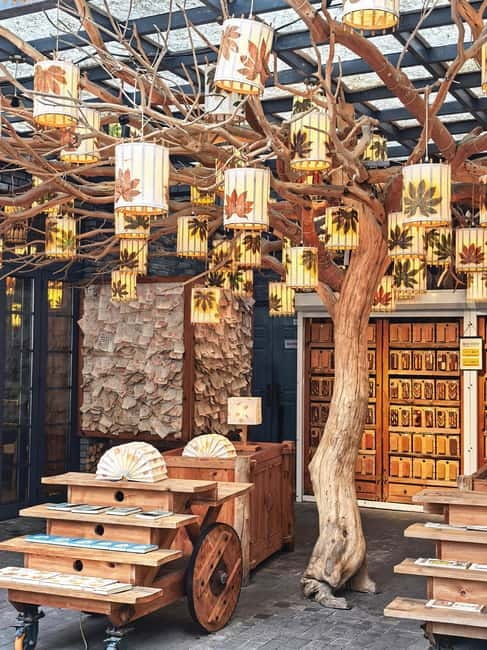
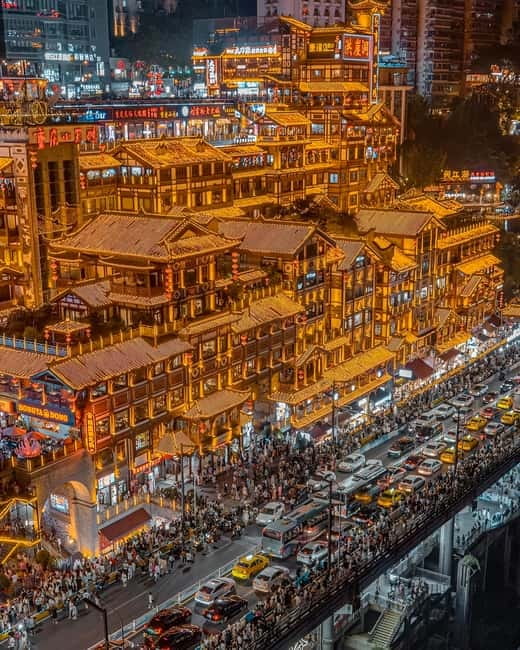
After the square, you move toward Changjiahui Danzishi Laojie Street for photo stops and guided sightseeing on foot. This part of the day is about changing angles: street-level views, architectural edges, and the kind of alley energy you don’t get from a single landmark photo.
I like that this isn’t just one building and done. You’ll take small stops, walk short stretches, and let the guide point out what matters so you’re not filming the wrong side of a wall.
Daijia Lane and Kuixinglou: the cliffside walkway feeling
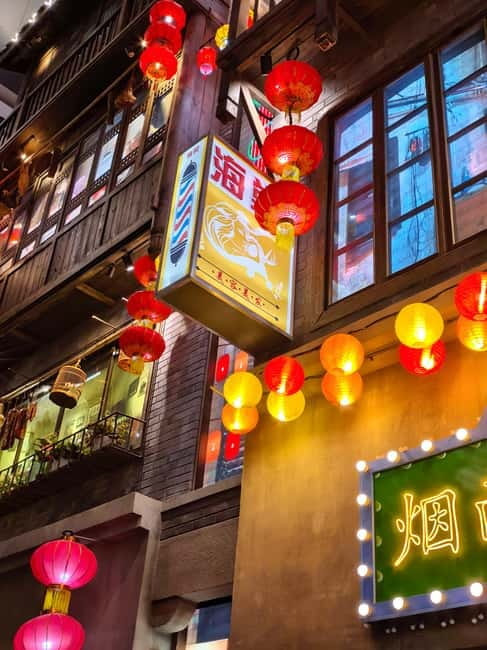
One of the most memorable sections is the cliffside-style walking. You’ll use iron handrails while navigating steps carved into the mountainside, plus narrow walkways where you can peer through gaps between buildings. This is where laundry may flutter like bright flags above dizzying drops.
Stops like Daijia Lane and Kuixinglou lean into the “Chongqing is vertical” theme. You see everyday life at impossible angles, and that’s what makes these moments feel real instead of staged.
If you’re traveling with kids, this is the zone where I’d slow the plan and check comfort level first. Even for adults, the steps and handrail sections are worth treating as a real walking segment, not a quick photo stop.
Ferry time: sunset on the two rivers and that skyline glow
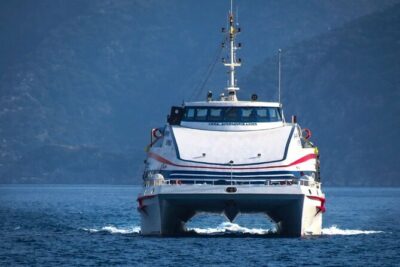
Next, you board a sunset ferry for a one-way ride while the sky shifts into oranges and purples. The water does the easy work of making the skyline feel cinematic. You’ll feel gentle waves rocking the boat while the city’s thousands of lights begin to twinkle.
For photo people, this is one of the best uses of time on the schedule. The lighting changes gradually, so you can take shots, rest your legs, and come back to the view without rushing.
Liziba Viewing Platform: the train that passes through a building
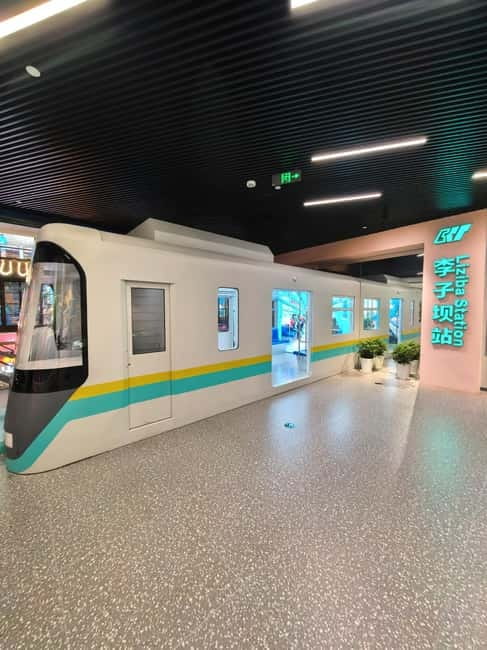
The tour ends with one of Chongqing’s most unusual photo moments: Liziba Viewing Platform. The signature feature is a train that appears to go straight through a building—driving through floors 6, 7, and 8—and then emerging again on the next segment.
This is a rare sight that’s both practical and surreal. It makes sense once you see the structure in motion, and it stays interesting even if you’ve seen photos before, because timing matters and the trains keep arriving.
If you like getting the shot, this is where you might wait a minute. Don’t rush. Watch for the rhythm so you’re ready when the train shows up in that “building tunnel” view.
A note on days and comfort: Monday closures and steep steps
Two practical reminders help you have a smoother day. First, the Eling Park scenic footbridge is closed for scheduled maintenance every Monday, so if your calendar puts you there, ask your guide what your best alternative viewpoint is.
Second, the route includes steep steps, high viewpoints, and lots of walking. Comfortable shoes aren’t optional here. Bring water and keep your smartphone charged, because you’ll want both hands free and enough battery for the cableway and sunset sections.
Who this private tour suits best
This tour is a strong match if you:
- Want multiple Chongqing highlights in one day without sorting logistics
- Love skyline photos, river views, and architecture that looks different from anything else
- Prefer a private guide who can adjust the pace and route
- Like the blend of old sites (Luohan Temple, restored river districts) with modern platforms
It may not be ideal if you:
- Have limited mobility or low tolerance for steep steps
- Hate heights, even if the views are worth it
- Need a very relaxed schedule with minimal walking
Price and value: what $158 is really covering
At $158 per person, you’re paying for a private guided experience plus key transport and ticket components. Included items include pickup at your hotel area, guide support in multiple languages, entrance to the millennium-old Luohan Temple, the one-way cableway ticket (with real-time crowd-based cancellation only), and the one-way sunset ferry ticket.
Food is not included. Lunch comes as a break at a local restaurant option, and there are add-ons if you want a specific style like simple local fare or a non-spicy hotpot-friendly lunch. That’s actually a plus if you’re picky about spice or dietary needs—you can choose what works for you.
So the value equation is simple: if you want the cableway, ferry, and major landmarks on one day with a guide handling the flow, it’s reasonable. If you only care about one or two sites, you might do better assembling a shorter self-guided plan.
Should you book this Chongqing tour?
I’d book it if you want a high-impact day that makes Chongqing’s vertical identity understandable—temple to tower, river to cliff, and finally that Liziba train shot. The guide flexibility is a real advantage, especially for people who care about seeing everyday local areas rather than only famous monuments.
Skip it only if steep walking and heights are a hard no for you. Otherwise, bring good shoes, plan your camera battery, and enjoy the ride—Chongqing is built to surprise you, one altitude change at a time.
FAQ
How long is the Chongqing private tour?
It runs for about 9 hours.
What’s included in the price?
You get a private guided tour (English and other languages), hotel pickup, transportation with Didi or a chartered car, entrance to Luohan Temple, a one-way river-crossing cableway ticket, and a one-way sunset ferry ride.
Is lunch included?
Lunch and drinks are not included. The tour includes a break time for lunch, and you can book food as an add-on.
Is the cableway guaranteed?
It includes a one-way cableway ticket, but it can be cancelled only due to real-time huge crowds and long waiting time during peak season to keep the experience better.
What time is the ferry ride?
The ferry ride is a sunset cruise, with the schedule focused on evening light.
Are there any closures to know about?
The scenic footbridge in Eling Park is closed for scheduled maintenance every Monday.
What should I bring?
Bring your passport, comfortable shoes, water, and a charged smartphone.