REVIEW · NEW YORK CITY
Brooklyn Bridge, Brooklyn Heights & DUMBO Walking Tour
Book on Viator →Operated by New York City By Foot · Bookable on Viator
Brooklyn Bridge photos begin before you reach the middle. This 3-hour walk strings together Brooklyn Bridge engineering, the photo-famous Brooklyn Heights Promenade, and the industrial-chic feel of DUMBO. I like that the route is designed for views at street level, not just sightseeing from a bus window, and I like that your guide brings the history to life with clear stories and photo help. One real consideration: the bridge wind can get sharp, so dress for cold air even in mild seasons.
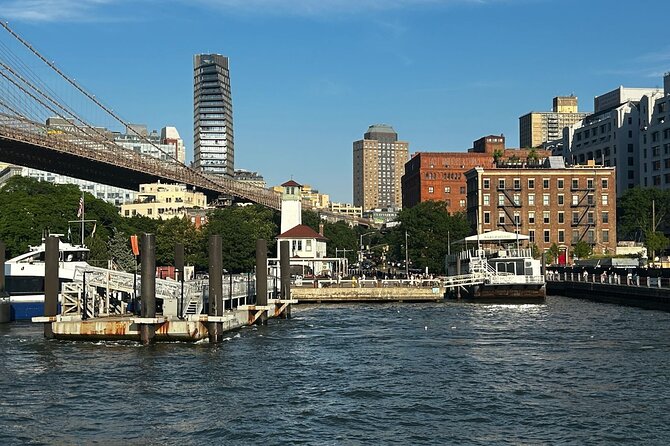
You start in Lower Manhattan at Brooklyn Bridge–City Hall, then finish at Fulton Ferry Landing in Brooklyn—convenient for grabbing the East River Ferry back toward Wall Street/Pier 11. It’s an English-language, small-group tour (max 20), with a mobile ticket, and the pace is built for stopping often without feeling like you’re stuck.
In This Review
- Key highlights you’ll actually feel on this tour
- Setting out from Brooklyn Bridge–City Hall to Fulton Ferry Landing
- Crossing the Brooklyn Bridge: pedestrian deck views and where the magic happens
- Brooklyn Heights Promenade: the view over the Brooklyn Queens Expressway
- Brooklyn Heights streets: Revolutionary War echoes and Truman Capote’s home
- DUMBO under the Manhattan Bridge: cobblestones, warehouses, and photo angles
- Time Out Market Brooklyn and Time Out Market New York: practical food breaks
- Jane’s Carousel: the small stop that changes the feel of the day
- The East River Ferry back to Manhattan: planning your finish well
- Price and logistics: small group, mobile ticket, and how to dress
- Who this tour is best for
- Should you book this Brooklyn Bridge to DUMBO walking tour?
- FAQ
- How long is the Brooklyn Bridge, Brooklyn Heights & DUMBO walking tour?
- Where do I meet and where does the tour end?
- What language is the tour offered in, and how big is the group?
- Is there a ferry included back to Manhattan?
- Do I need a mobile ticket?
- What is the cancellation policy?
Key highlights you’ll actually feel on this tour
- A guided walk across the pedestrian promenade of the Brooklyn Bridge, kept separate from traffic lanes
- Brooklyn Heights Promenade views over the expressway—famous for a reason and easy to photograph
- Brooklyn Heights street stories tied to the Revolutionary era, abolitionist activism, and Underground Railroad stops
- DUMBO under the Manhattan Bridge Overpass with cobblestones, warehouse spaces, galleries, and cafés
- Two Time Out Market moments so you can plan lunch and then keep the walking energy going
- An East River Ferry ticket back to Manhattan with your guide helping with boarding logistics
Setting out from Brooklyn Bridge–City Hall to Fulton Ferry Landing
This tour has a clean beginning and ending, which matters in New York. You meet at Brooklyn Bridge–City Hall (Lower Manhattan) and you finish at Fulton Ferry Landing (Brooklyn), right where the ferry scene is easy to navigate.
Timing is also practical. The tour is about 3 hours, and you’re usually on the move enough to feel like you covered ground, but you’re also stopping often enough to actually see what you’re passing. With a group size capped at 20, you won’t feel swallowed by a crowd.
Since you’re walking across the bridge and back through several neighborhoods, you’ll want to think like a local for the day: comfortable shoes, layers, and an energy plan for lunch. The itinerary also includes a carousel stop, so there’s room for a little nostalgia, not just photo stops.
You can also read our reviews of more walking tours in New York City
Crossing the Brooklyn Bridge: pedestrian deck views and where the magic happens
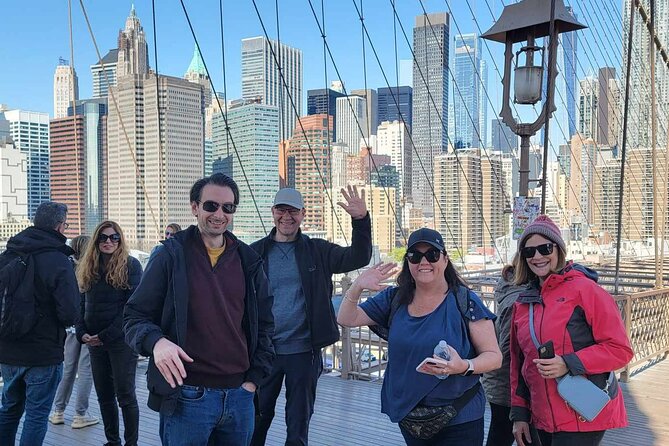
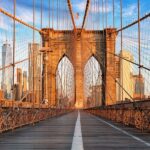
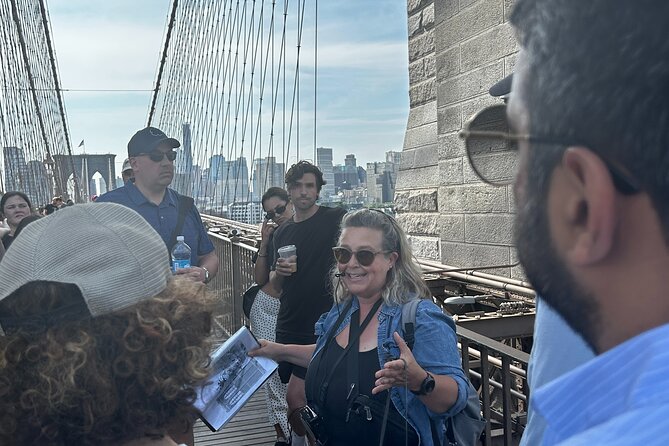
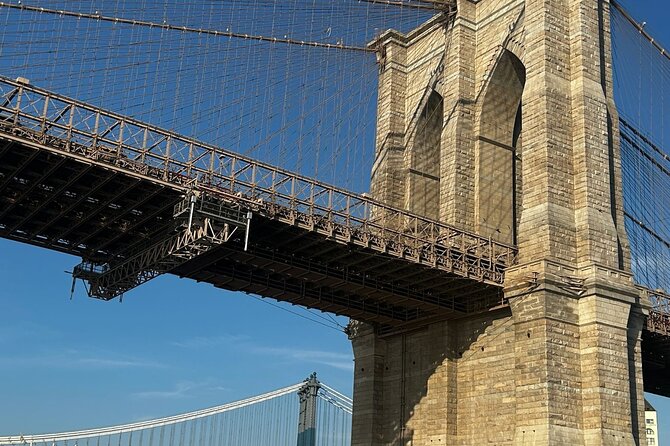
Walking the Brooklyn Bridge is the whole point, and you feel that right away. The big win is that you’re on the pedestrian promenade with barriers separating you from the traffic lanes, so you can look around without dealing with constant lane-by-lane stress.
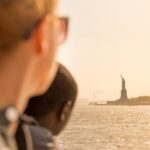
Expect iconic views immediately: the Manhattan skyline, the East River, and the distant Statue of Liberty. If you like photos, this is one of those routes where even quick pauses turn into great shots because you’ve got changing angles as you move.
Your guide gives the bridge context too, including design by John A. Roebling and completion in 1883. That detail turns a landmark into something you can “read.” Instead of just thinking, wow, it’s old, you start noticing why the bridge looks the way it does.
This is also where the weather can get you. One past guest mentioned being so cold by the end that they were frozen, and that tracks with bridge conditions—wind funnels through open spaces. Bring a hat and something that cuts the breeze, even if the day looks fine on the sidewalk.
Brooklyn Heights Promenade: the view over the Brooklyn Queens Expressway
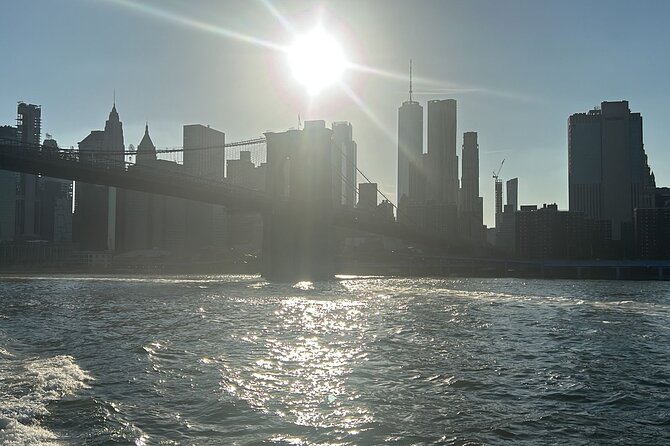
After the bridge, you step into Brooklyn Heights Promenade, one of the city’s most photographed walkways. It’s about 1,800 ft (550 m) long, and it sits directly over the Brooklyn Queens Expressway—so you get this weird, wonderful mix: serious city motion just below, and a calm pedestrian path above.
What I love about this stop is how quickly it delivers payoff. You don’t need to figure out where the best angle is—you just walk, and the skyline frames itself around you. It’s also a spot where you can slow down without worrying you’re holding up the group, since the route naturally supports lingering.
Look for the classic Brooklyn Heights perspective: Manhattan towers to one side, the river energy in the middle distance, and a sense of height that makes the promenade feel like a viewpoint instead of a sidewalk. If you’re the kind of traveler who likes to trade “more stops” for “better view per stop,” this is that choice.
Brooklyn Heights streets: Revolutionary War echoes and Truman Capote’s home
From the promenade, the walk shifts from postcard views to neighborhood history. Brooklyn Heights is often described as America’s first suburb, and it’s easy to see why—tree-lined streets, a calmer pace than the bridge area, and a layered past that shows up in what the neighborhood is known for.
You’ll hear stories tied to Revolutionary War battles, abolitionist activism, and the homes and ideas that inspired novelists. That matters because Brooklyn Heights doesn’t feel like a theme park. It feels like a real neighborhood where history still lives in the street grid and in what the community preserved.
Two specifics stand out in the context you’ll get:
- Underground Railroad connections, including stops tied to escape routes
- Truman Capote’s home, where he penned Breakfast at Tiffany’s
That combo makes the stop more than scenic walking. You’re looking at places and thinking about movement—people crossing, escaping, writing, organizing. Even if you only remember one fact later, the neighborhood context tends to stick.
If you’re short on time in NYC, this section gives you a contrast to the bridge: less engineering, more human story.
DUMBO under the Manhattan Bridge: cobblestones, warehouses, and photo angles
Then the tour drops you into DUMBO, which stands for Down Under the Manhattan Bridge Overpass. And yes, the name is literal enough that you’ll understand it fast.
Here the mood changes. You’ll walk cobblestone streets and see how converted warehouses now hold art galleries, studios, boutiques, and cafés. It’s an industrial look that’s been repurposed with intention, and that blend makes it fun even if you’re not a big shopper.
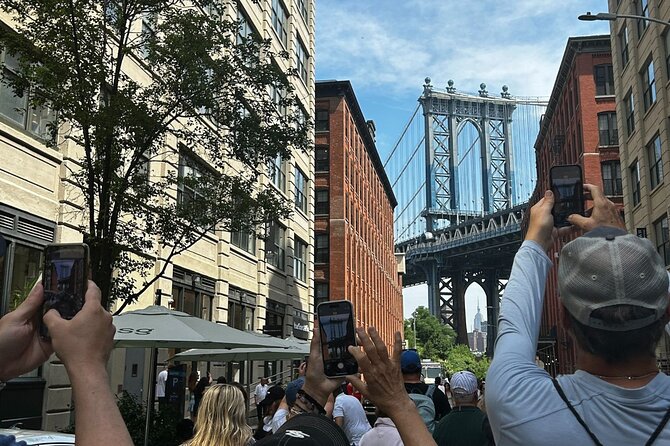
Your guide will also point you toward strong photo moments, including the Manhattan Bridge view area in DUMBO. That stop is short, but it’s targeted: you’re not just wandering until you find a view. You go to a spot where the angle is made for travel photos and skyline framing.
DUMBO also tends to be where people snack or browse for a few minutes, since there’s a natural rhythm of storefronts and side streets. This is one of those neighborhoods where it’s worth taking slow steps for ten minutes, because the details are the point.


Time Out Market Brooklyn and Time Out Market New York: practical food breaks
Two Time Out Market stops help break up the walk in a realistic way. First comes Time Out Market Brooklyn, where you stop for lunch after roughly 30–40 minutes of walking.
I like this design because it avoids the common mistake of either starving you early or letting the whole tour get derailed by long sit-down meals. You get a practical window to refuel, grab something quick, and then keep moving.
After that, there’s still time to explore, including Brooklyn Bridge Park for more open-air space and bridge views. That park time balances the urban intensity with room to breathe.
Later you head through Time Out Market New York. You’re not stuck there for a meal the whole tour; it works as a final, convenient endpoint to keep the day feeling complete. Time Out Market is a historic warehouse setting, so the vibe is part of the experience, not just the food.
One more thing: the tour data doesn’t say your meals are included, so plan on paying for what you want to eat. If you’re sensitive to delays, set a budget and decide what you want quickly—markets can tempt you into decision fatigue.
Jane’s Carousel: the small stop that changes the feel of the day
Not every walking tour includes a moment like Jane’s Carousel, and that’s exactly why it’s worth appreciating. This is a restored carousel that brings a bit of old-school fun into a day otherwise packed with bridges, promenades, and neighborhood history.
It’s only around 5 minutes in the flow, but that’s the point. The stop gives you a mental reset. You step off the “photo brain” and into something playful, which is helpful when you’ve been standing and looking for a while.
If you’re traveling with kids, it’s an easy win. If you’re traveling as adults, it still works because it breaks up the pace in a way that makes the last stretch more enjoyable.
The East River Ferry back to Manhattan: planning your finish well
The tour includes a complimentary ticket for the East River Ferry from Brooklyn back to Manhattan, and the guide helps you with boarding logistics and where to stand before the ferry departs. That’s a big value add because it turns your day into a full “loop” instead of ending with a scramble for transit.
The route connects you back toward Pier 11 / Wall Street, which is a practical landing zone for many hotels and next-day plans.
That said, there’s a planning wrinkle worth taking seriously. One past guest flagged that the ferry ticket wasn’t provided as expected at the end of the tour. I can’t say how often that happens, but I can tell you what to do: confirm right away at the start (or ask your guide at the end) that your ferry ticket is included and usable for your planned departure time. That quick check can prevent a late-day headache.
Also remember the bridge and ferry run in the real weather of the river. If it’s cold, you might want a warm layer for the ferry ride too.
Price and logistics: small group, mobile ticket, and how to dress
Even without getting into exact pricing, you can judge value by what you get for the walking time. You’re paying for a licensed guide plus the structure of a route that hits major “must-see” spots without you doing map math all day. The included ferry ticket is also the kind of add-on that would cost money on its own if you had to arrange it separately.
Logistics are also fairly smooth:
- Mobile ticket for the experience
- English-language guide
- Near public transportation
- Max group size of 20 travelers
- Start time at 9:30 am
What you should plan for is the physical side. You’re walking across the Brooklyn Bridge and then through multiple neighborhoods. Wear shoes you trust. Bring a light backpack if you can, so you can hold a layer or a water bottle without juggling.
Weather matters more than you might expect. If it’s chilly, the wind on the bridge is the moment you’ll feel first. If it’s hot, the markets and indoor spots can become your cool-down without breaking the tour flow.
Who this tour is best for
This tour is ideal if you want the classic NYC “see it and understand it” combo. You get skyline views, neighborhood texture, and history woven into the walking route, not delivered as a lecture you tune out halfway through.
It also fits well if:
- you want a guided approach with built-in photo stops
- you like turning landmarks into context (engineering, neighborhood history, and named places)
- you want a simple return plan to Manhattan via the ferry
If you hate walking, this is probably not for you. This is a full-on pedestrian route, designed for people who enjoy moving through cities on foot.
Should you book this Brooklyn Bridge to DUMBO walking tour?
Yes, if you’re craving a guided day that combines the bridge, Brooklyn Heights views, and DUMBO character in a tight 3-hour window. It’s also a strong value because of the guide plus the East River Ferry ticket back to Manhattan, and because the route is structured for stops that actually matter.
Book it with two smart precautions: dress for bridge wind, and confirm the ferry ticket details so your ending is smooth. If you do those two things, this tour makes NYC feel like a city you’re walking through, not just a skyline you’re staring at.
FAQ
How long is the Brooklyn Bridge, Brooklyn Heights & DUMBO walking tour?
The tour runs for about 3 hours.
Where do I meet and where does the tour end?
You start at Brooklyn Bridge–City Hall in New York, NY and the tour ends at Fulton Ferry Landing at 1 Water St, Brooklyn.
What language is the tour offered in, and how big is the group?
The tour is offered in English, and it has a maximum group size of 20 travelers.
Is there a ferry included back to Manhattan?
Yes. The tour includes a complimentary East River Ferry ticket traveling from Brooklyn back to Manhattan, and your guide can help with boarding logistics near the end.
Do I need a mobile ticket?
Yes, the tour uses a mobile ticket.
What is the cancellation policy?
You can cancel for a full refund if you do so at least 24 hours before the experience starts. If you cancel within 24 hours of the start time, the amount paid is not refunded.