REVIEW · BERGEN
Guided tour to Hardangerfjord with Waterfalls and Ferry Crossing
Book on Viator →Operated by Fjordrive Tours AS · Bookable on Viator
One fjord day, lots of wow. This Hardangerfjord trip mixes waterfall viewpoints, small fjord villages, and car ferries, all in one long-but-manageable loop. I especially like how you get timed photo stops at places like Steinsdalsfossen and how the drive keeps you close to the fjord.
What I like even more is the human touch from the guide on the route, often named Thomas or Geir, who brings Norwegian stories to life while you’re on the road. The one thing to watch is the long day: you spend real time in the bus and inside car ferries, so plan for a lot of sitting.
In This Review
- Key points at a glance
- Hardangerfjord by bus and car ferry: what this 8.5-hour loop gives you
- Start in Bergen at Strandkaien 1 and get comfortable for the long day
- Waterfall stops: Trengereid, Mørkhølsfossen, Fossen Bratte, and Steinsdalsfossen
- Trengereid viewpoint: East Fjord + Osterøy in one frame
- Mørkhølsfossen: short stop, calm payoff
- Fossen Bratte: 79 meters, one drop, plus a look at old roads
- Steinsdalsfossen: the stop with the best access
- The drawback to keep in mind
- Norheimsund lunch time: where you can actually reset
- Car ferries to Utne and Tørvikbygd: the easy way to feel the fjord
- What’s valuable about these ferry breaks
- What might disappoint
- Utne and Herand: small places, real fjord atmosphere
- Road 550 and orchard country: why the long drive is part of the point
- Jondal to Bergen: the return timing and how to pace yourself
- Price and value: is $236.93 worth it?
- Weather, road works, and what can change on a fjord day
- Should you book this Hardangerfjord day trip?
- FAQ
- What time does the tour start, and where is the meeting point?
- How long is the Hardangerfjord tour?
- Is the tour offered in English?
- What is included in the price?
- Are meals included?
- How many people are in the group?
- What kind of transportation is used?
- What happens if the weather is bad?
Key points at a glance
- Two car ferry crossings with bathrooms and places to grab a quick snack/drink
- Waterfalls with actual access, including a path behind Steinsdalsfossen so you don’t get soaked
- Small group size (max 18) and frequent breaks for photos and toilets
- Utne and Herand village stops for wooden houses, old-world charm, and fjord views
- Guide commentary that goes beyond the scenery, with humor and culture mixed in
Hardangerfjord by bus and car ferry: what this 8.5-hour loop gives you
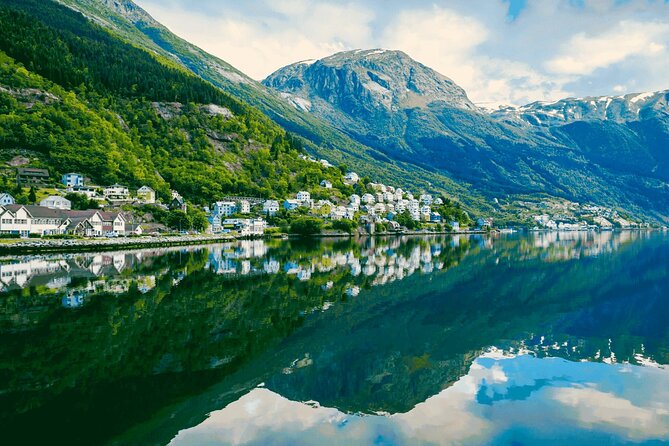
If you’ve only got one day near Bergen, this is a smart way to feel Hardangerfjord’s scale. You’ll hit multiple waterfall stops, ride along road 550 for orchard views, and take two car ferries that break up the driving.
The structure is what makes it work. You’re not rushing through every stop at a sprint, but you also aren’t doing long hikes that eat the whole day. It’s a day for photos, viewpoint time, and fjord ambience without needing a rental car.
You can also read our reviews of more guided tours in Bergen
Start in Bergen at Strandkaien 1 and get comfortable for the long day
The tour starts at Strandkaien 1, Bergen at 9:30 am and returns back there around 18:00 to 18:30. Expect about 8 hours 30 minutes total, so this is full-day energy even if you’re stopping often.
You ride in an air-conditioned vehicle, which matters more than you’d think in Norway. Small-group size helps too, with a maximum of 18 travelers, so you’re more likely to move smoothly at stops rather than fight for space.
One practical note: meals aren’t included. You’ll have a lunch window in Norheimsund, plus small kiosks on the ferries, so bring cash/card comfort and be ready to buy food on your own.
Waterfall stops: Trengereid, Mørkhølsfossen, Fossen Bratte, and Steinsdalsfossen
This itinerary is built around four classic stops early on, and each one scratches a different itch.
Trengereid viewpoint: East Fjord + Osterøy in one frame
You stop in Trengereid for about 15 minutes at a viewpoint. It’s timed well: you get a quick reset after leaving Bergen and a wide view over the East Fjord and the island of Osterøy.
There’s also a small bakery and public toilets, so this is a good place to top up on water and snacks before you start bouncing around waterfalls. If you hate scrambling for basic needs later, this early stop saves you stress.
Mørkhølsfossen: short stop, calm payoff
Next is Mørkhølsfossen in Tysse, with roughly 10 minutes. It’s described as small but picturesque and easy to reach from the main road, which makes it ideal if you’re traveling with mixed energy levels.
Don’t expect a huge walk or a long viewpoint trail. The value here is the quick contrast: fjord views, then a gentle cascade break, then back to driving.
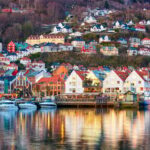
Fossen Bratte: 79 meters, one drop, plus a look at old roads
Fossen Bratte is the dramatic one on the list. You’ll hear it before you fully see it: the river Eikedalselva runs in a single drop about 79 meters high. You also get a short photo stop and then a brief stretch down the old road, meant to show what driving in Norway looked like in the past.
This is a great stop for photography, but it’s also a reminder that Norway’s waterfalls aren’t just postcard scenery. They’re part of daily geography, shaping where roads and settlements go.
Steinsdalsfossen: the stop with the best access
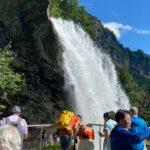
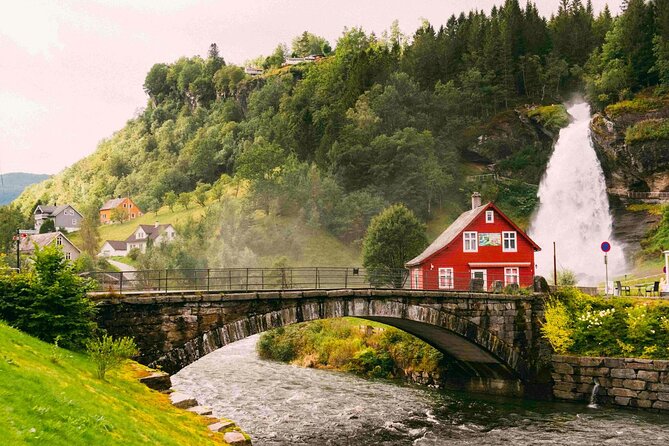
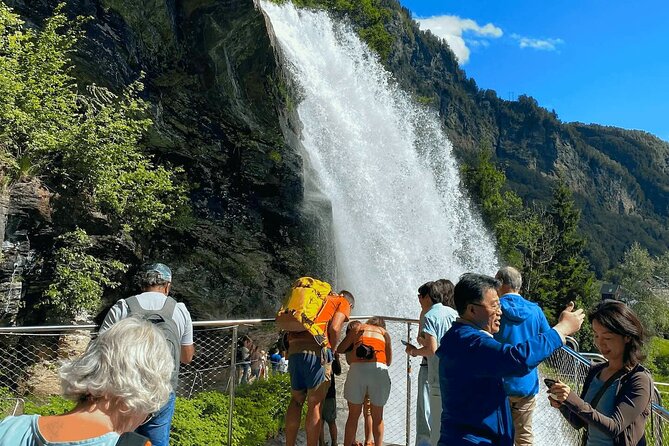
If you like waterfalls you can actually get close to, Steinsdalsfossen near Norheimsund is the highlight. The river formed this drop around 1699 and it’s about 50 meters tall. The best part is the path layout: you can walk along the back of the waterfall without getting wet.
At the car park you’ll find tourist information and public toilets, then you cross via a short path and an old stone arch bridge to reach the falls. If you want a pause that feels like you’re listening to nature, there’s also a cozy café behind the bridge, where you can sit and listen to the stream.
The drawback to keep in mind
These waterfall stops are mostly short. That’s great for time management, but it means you’ll need to move efficiently, especially if weather turns. If you want long lingering at one place, this tour is more about stacking multiple viewpoints than slow soaking at a single waterfall.
Norheimsund lunch time: where you can actually reset
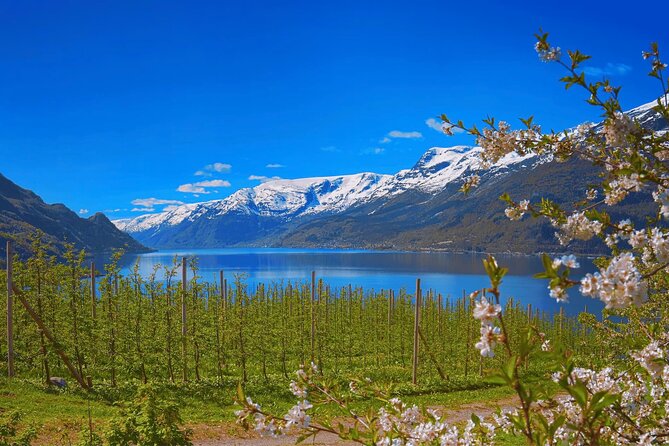
You’ll reach Norheimsund on the Hardangerfjord for about 45 minutes. This stop is your practical middle of the day: enough time to eat without rushing, plus time for a wander and a look at the town atmosphere.
The area is set up for visitors. There are several restaurants and even a small shopping center with a bistro, so you’re not stuck hunting for options. Also, the driver will show you where the bus will leave later, which keeps you from losing time to confusion.
If you’re someone who wants to avoid feeling rushed, this is the stop that helps most. A waterfall day can get tiring; this is where you put your feet on the ground and reset your battery.
Car ferries to Utne and Tørvikbygd: the easy way to feel the fjord
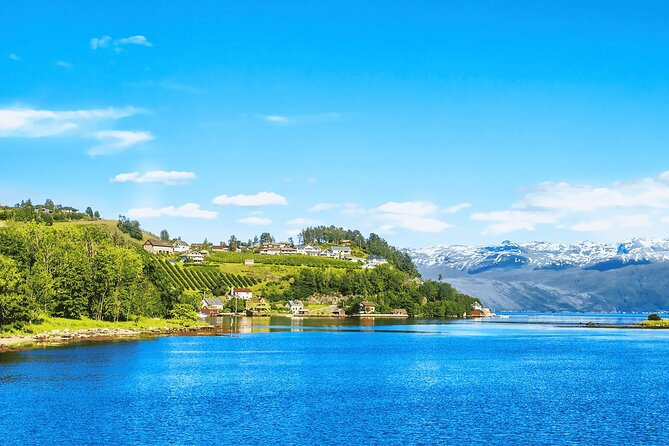
Hardangerfjord isn’t just scenic from the road. The ferries give you a different angle on the water and coastline.
You’ll take a car ferry in Kvandal at 2:00 pm, and the crossing to Utne takes about 20 minutes. Onboard there are bathrooms and a small kiosk, plus you can get excellent photos from the upper deck.
Later, you’ll take the second ferry from Jondal to Tørvikbygd at 15:20. That crossing takes about 20 minutes and crosses the main arm of the fjord. This ferry also has bathrooms and a self-service café, and you can take photos from the upper car deck.
What’s valuable about these ferry breaks
They split up the long bus stretches. They also let you see fjord bends in a way roads can’t always show cleanly because of curves and roadside obstacles.
What might disappoint
Car ferries are functional by design. If you expect a long, scenic boat ride like a cruise, this is more quick-crossing than sightseeing at sea level. Still, the photo deck access makes the crossings feel worthwhile.
Utne and Herand: small places, real fjord atmosphere
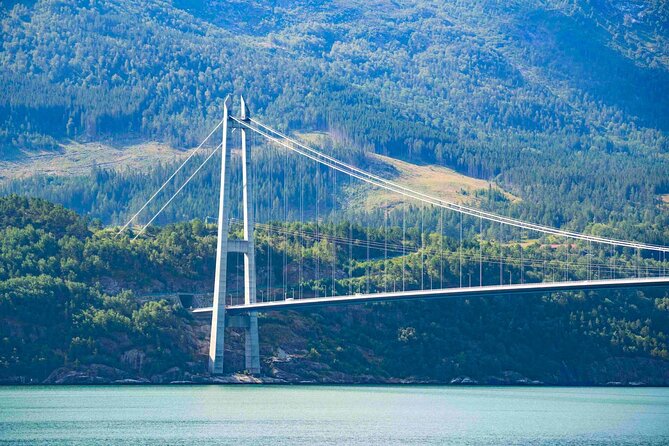
Once you dock in Utne, the vibe shifts from “stop and snap” to “pause and absorb.” Utne is known here for old-world charm, with well-kept streets and traditional wooden houses. You’ll also hear about the 300-year-old Utne Hotel, which adds a sense of continuity to the fjord life you’re seeing.
Then you head to Herand, stopping at a small marina. There’s a self-service kiosk and public washrooms, and the marina setting makes it a nice break point. The onward drive to the ferry quay in Jondal is only about 15 minutes, so you get a short leg of scenery before the next crossing.
If you love the feeling of fjord towns that aren’t trying too hard for tourists, this middle and late portion is where the tour tends to click.
Road 550 and orchard country: why the long drive is part of the point
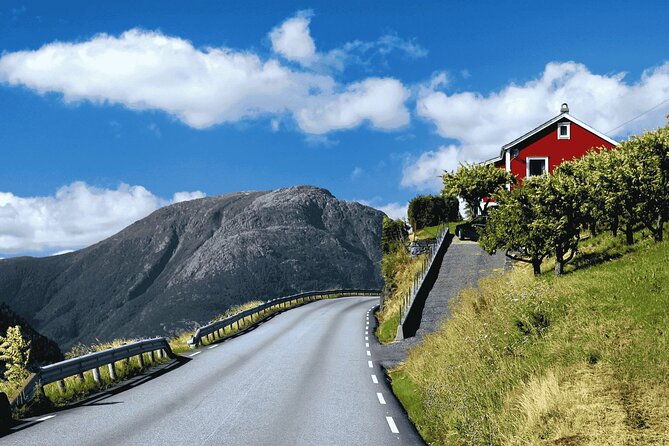
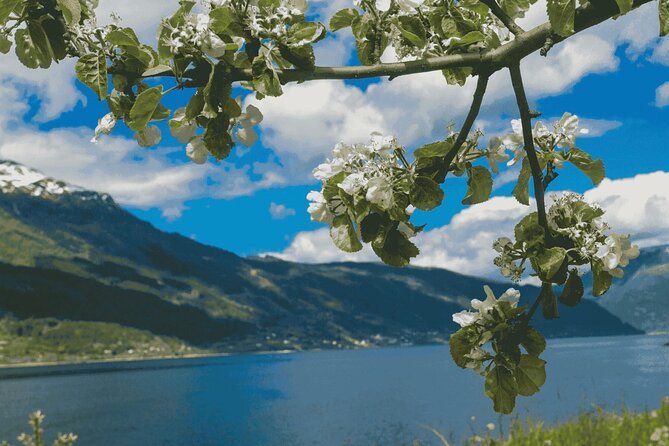
After Utne, you’ll do the scenic drive from Utne to Jondal along road 550. It’s about 36 km and takes roughly 35 minutes, and the itinerary tells you what to watch: orchards are characteristic of the region.
This matters because it changes Hardangerfjord from a “water only” destination into a working landscape. You’re not just seeing dramatic water; you’re seeing where fruit grows, where people live, and how roads connect small places.
You’ll also have photo stops as often as weather and time allow. That’s a key advantage of this kind of small-group day trip: the driver can manage small changes when the view looks better than expected or clouds come in fast.
Jondal to Bergen: the return timing and how to pace yourself
The second ferry from Jondal gets you to Tørvikbygd at about 15:50. From there, you head directly back to Bergen, with the day expected to end around 18:00 to 18:30.
One helpful way to think about the return: the main sightseeing work is already done by then. This is where you’ll want to settle in, hydrate, and let the fjord scenery blur by through the bus windows.
Price and value: is $236.93 worth it?
At $236.93 per person, this isn’t a budget outing. But you’re paying for a full package: air-conditioned transport, ferry tickets, and all fees/taxes, all in one day without you planning two different ferry routes yourself.
Here’s the value angle that makes sense for many visitors:
- You get multiple waterfalls, not just one
- You get two ferry crossings, which would be a planning hassle by yourself
- Stops are structured so you can use toilets and grab snacks without running around
The main reason some people feel it’s expensive is also simple: it’s a long day with a lot of road time and a couple of short water/food windows. If you’re hoping for hours of one-on-one wandering, or you hate being on buses, your money might feel better spent on a slower-style itinerary.
Weather, road works, and what can change on a fjord day
Norway weather can turn fast, and this tour is explicitly described as requiring good weather. If it’s canceled due to poor conditions, you’ll be offered another date or a full refund.
Real-world timing is also affected by roads. The route includes several small roadside stops and set ferry times, so construction, closures, or delays can change the exact flow of the day. When that happens, the tour’s best feature becomes flexibility: the day is still built around fjord highlights, even if the order or timing shifts.
Practical tip: dress like you’ll get rain, then hope you don’t. Bring layers you can handle quickly at waterfalls, especially if you plan to walk near Steinsdalsfossen.
Should you book this Hardangerfjord day trip?
Book it if you want a one-day Hardangerfjord sampler that balances waterfalls, fjord towns, orchards, and ferries. This is especially good if you’re traveling without a car and want the convenience of someone else handling routing, timing, and ferry entry.
Skip it, or choose a different style, if you hate long drives and short stops. This is a “see a lot” day, not a “hang out for hours in one village” day. Also, if you’re very food-sensitive, plan ahead since meals aren’t included.
If the stars align and you get a guide like Thomas (or Geir) who keeps things lively, the day can feel like more than a checklist. It becomes a smooth, scenic loop that makes Hardangerfjord feel reachable, even in one day.
FAQ
What time does the tour start, and where is the meeting point?
The tour starts at 9:30 am at Strandkaien 1, 5014 Bergen, Norway.
How long is the Hardangerfjord tour?
The duration is approximately 8 hours 30 minutes.
Is the tour offered in English?
Yes, the tour is offered in English.
What is included in the price?
Included are the air-conditioned vehicle, all fees and taxes, and ferry tickets.
Are meals included?
No. Meals are not included, so you’ll need to buy food during stops.
How many people are in the group?
The tour has a maximum of 18 travelers.
What kind of transportation is used?
You travel by air-conditioned vehicle, and you also take car ferries as part of the route.
What happens if the weather is bad?
This experience requires good weather. If it’s canceled due to poor weather, you’ll be offered a different date or a full refund. You can also get free cancellation up to 24 hours before the experience starts.