REVIEW · SHARM EL SHEIKH
From Sharm ElSheikh: The Lost City (Petra) Day Tour by Ferry
Book on GetYourGuide →Operated by FTS Travels · Bookable on GetYourGuide
Petra waits across a sea and a long ride. This tour is interesting because it mixes a ferry crossing with a full day inside Petra, so you don’t just visit a site—you travel the route that shaped trade and movement in this region. What I love most is the big, cinematic reveal as you enter the canyon, and the fact that lunch is included once you’re done walking and looking.
Just know the main drawback up front: this is a 20–23 hour kind of day. It can feel like a marathon, even if the logistics are planned and air-conditioned.
In This Review
- Key highlights to know before you go
- A 20–23 hour logistics marathon from Sharm to Petra
- Crossing the Gulf of Aqaba the practical way (via Taba)
- Getting into Petra: canyon walking and the slow reveal
- Al Khazneh (the Treasury): the stop with the wow-factor
- Roman Theater and the Citadel area: how the city entertained and organized itself
- The King Wall and its 13 graves: more than just an iconic canyon wall
- Lunch after Petra: a real sanity saver on a long day
- Price and value: what $329 covers (and what it doesn’t)
- Guide support, group size, and language comfort
- Packing list that actually helps (passport, shoes, and water)
- Should you book this Petra day tour from Sharm?
- FAQ
- How do I travel from Sharm El Sheikh to Petra on this tour?
- What Petra sites are included in the visit?
- What’s included in the price?
- How long is the day?
- What language options are available?
- What should I bring?
Key highlights to know before you go
- Ferry from Taba to Jordan helps break up the long transfer and makes the day feel like a real border crossing
- Petra’s top stops: Al Khazneh (Treasury), Roman Theater, and the 13 graves in the King Wall
- A tour guide on-site keeps the visit organized and helps you read what you’re seeing
- Lunch included so you’re not scrambling for food after all the walking
- English and Russian are offered, with guidance that can vary by segment and group
A 20–23 hour logistics marathon from Sharm to Petra
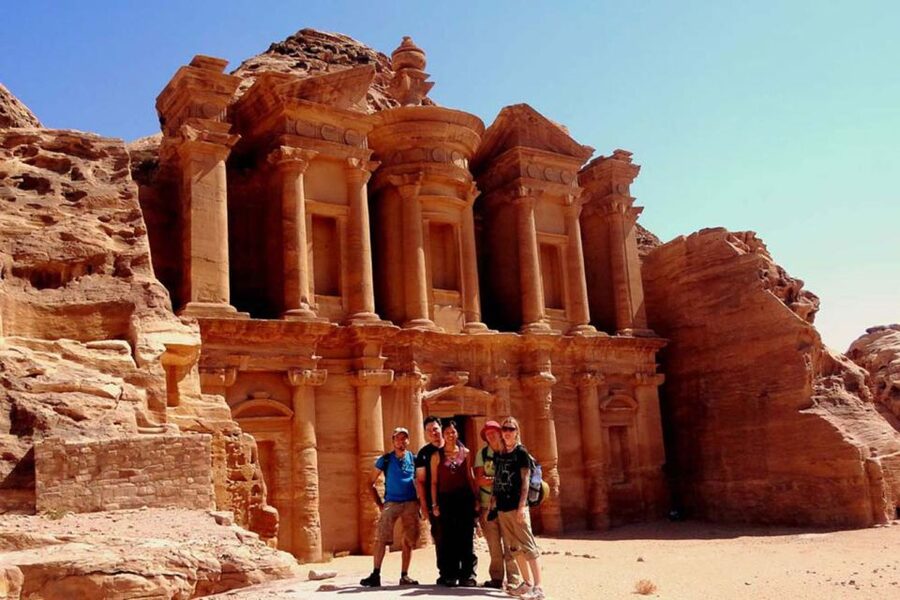
Let’s be honest: this tour is long. You start in Sharm El Sheikh and spend a good chunk of the day crossing the Sinai and then traveling onward to Jordan. Expect an early start and a late return. One of the best pieces of advice is to plan your day around the tour, not around a normal schedule. You’ll want low expectations for downtime, because the clock is always moving.
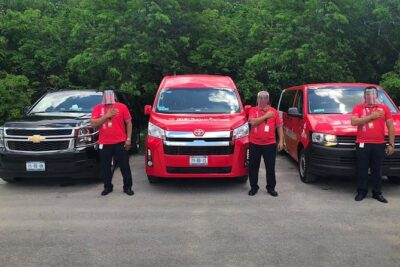
That said, the trip isn’t just time spent in a seat. The route is air-conditioned for the vehicle parts, and there’s a ferry segment that changes the rhythm. There are also stops along the way to rest your legs and reset—small details, but they matter when you’re doing a full day trip to a far-off site.
If you hate long travel days, you’ll feel it. If you’re the type who can handle long bus rides for one world-class stop, you’ll likely love the payoff.
You can also read our reviews of more tours and experiences in Sharm El Sheikh.
Crossing the Gulf of Aqaba the practical way (via Taba)
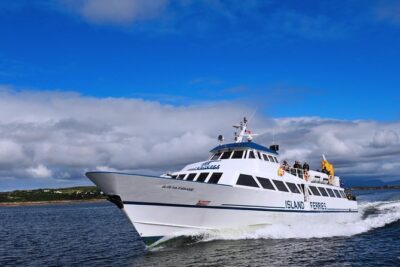
Your transfer starts with hotel pickup from Sharm, then you travel through the Sinai Peninsula to Taba. From there, the tour takes you by ferry across the Gulf of Aqaba to Jordan. For many people, that ferry is the mental shift that makes the day bearable. You’re not stuck only with highway travel; you get a change of scenery and a break from sitting.
On the Jordan side, you continue onward to the Petra area. The tour then heads toward the gorge of Ma’an, which is how you get to Petra rather than approaching it like a normal city attraction. That matters because Petra isn’t visited like a grid. It’s a canyon experience, and your route sets you up for that.
Also, double-check your travel documents. The tour includes a Jordan entry visa, but you still need your passport or ID card for the trip.
Getting into Petra: canyon walking and the slow reveal
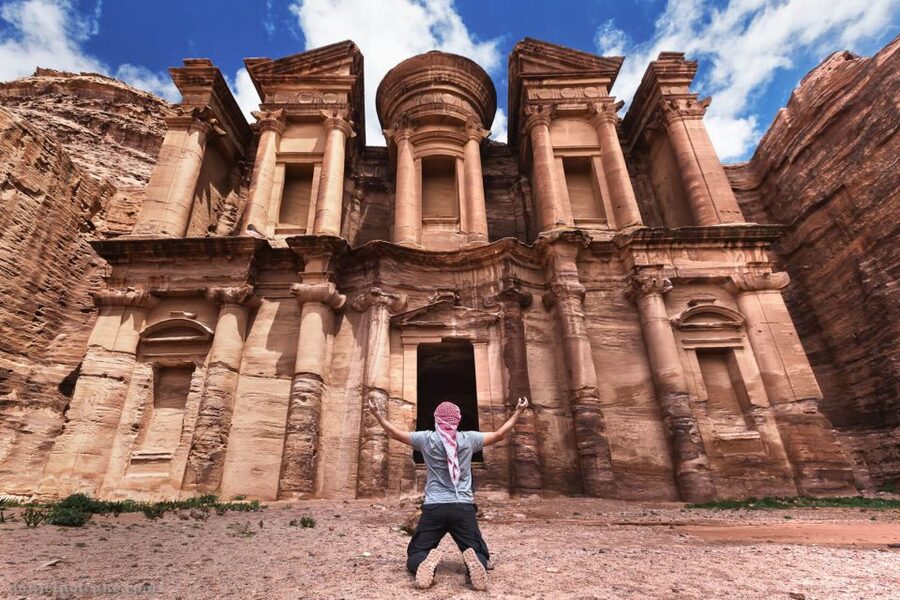
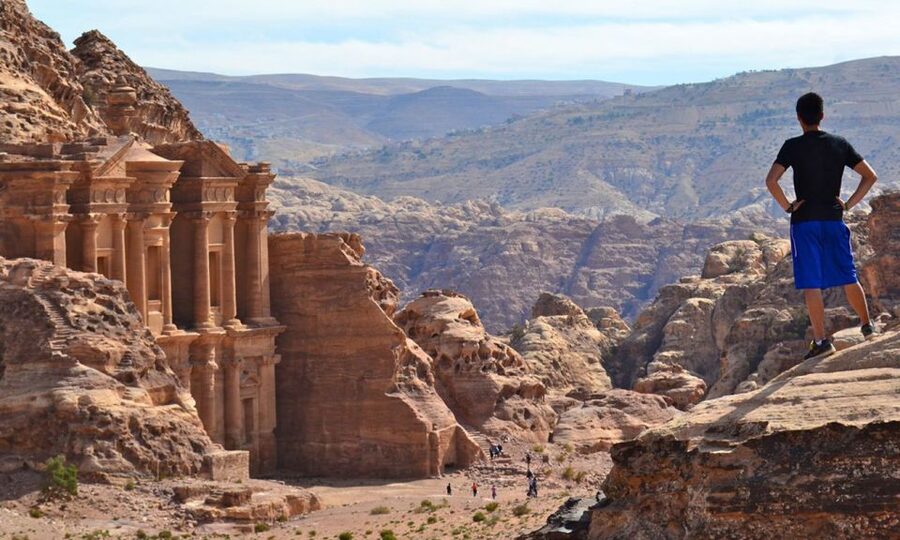
Once you reach Petra, the experience shifts fast—from road travel to stone and shadows. You’ll explore Petra as a canyon site, where the buildings are carved into pink rock and the views open gradually as you move deeper.
This is where I think the day tour does something smart: it focuses on the classic anchor points rather than trying to cover every square inch. That’s important because Petra can be overwhelming. When you have a limited time window on a long travel day, the best strategy is to prioritize the places that represent Petra’s big themes: the ceremonial entrance area, the public performance space, and the carved structures high in the terrain.
As you walk, keep your pace steady. Wear shoes that can handle uneven ground and long distance. You don’t want your feet to be the limiting factor when the whole reason you came is to see the carved wonder in front of you.
Al Khazneh (the Treasury): the stop with the wow-factor
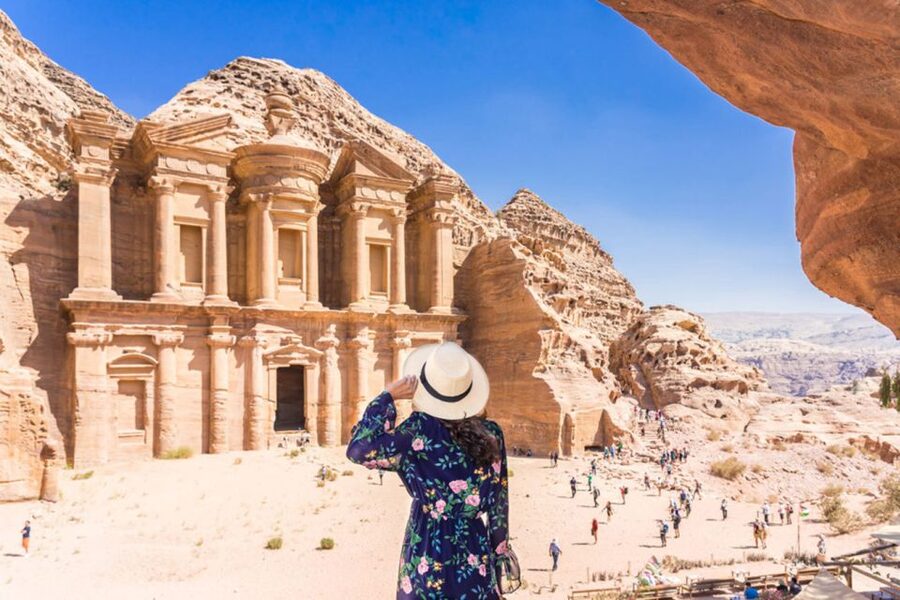
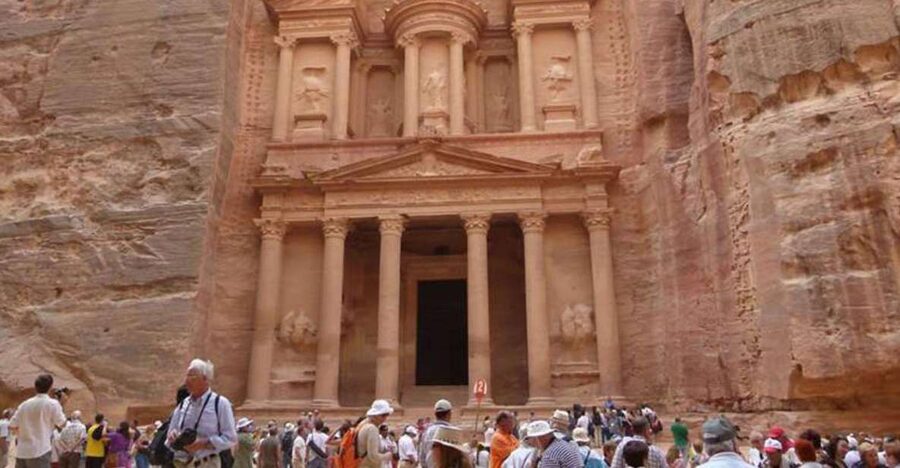
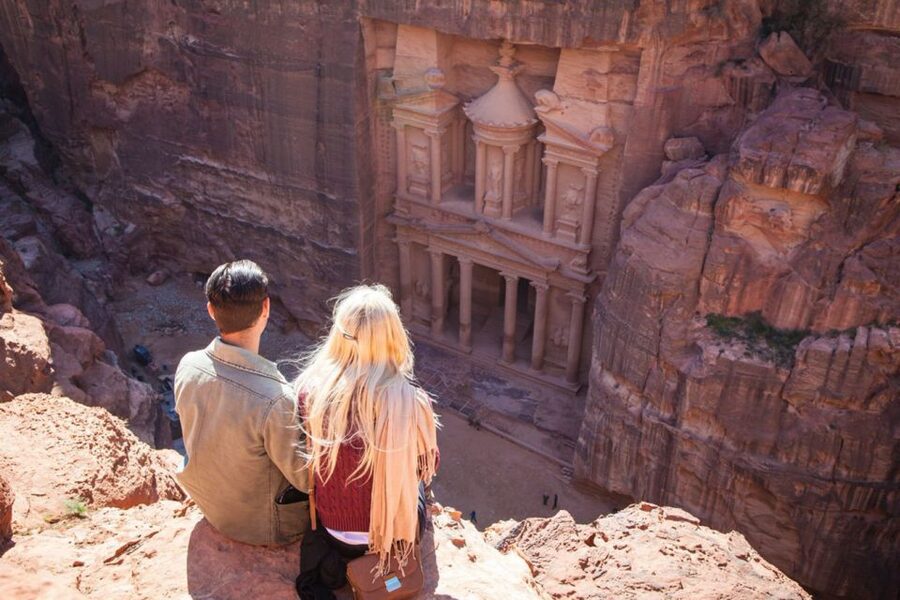
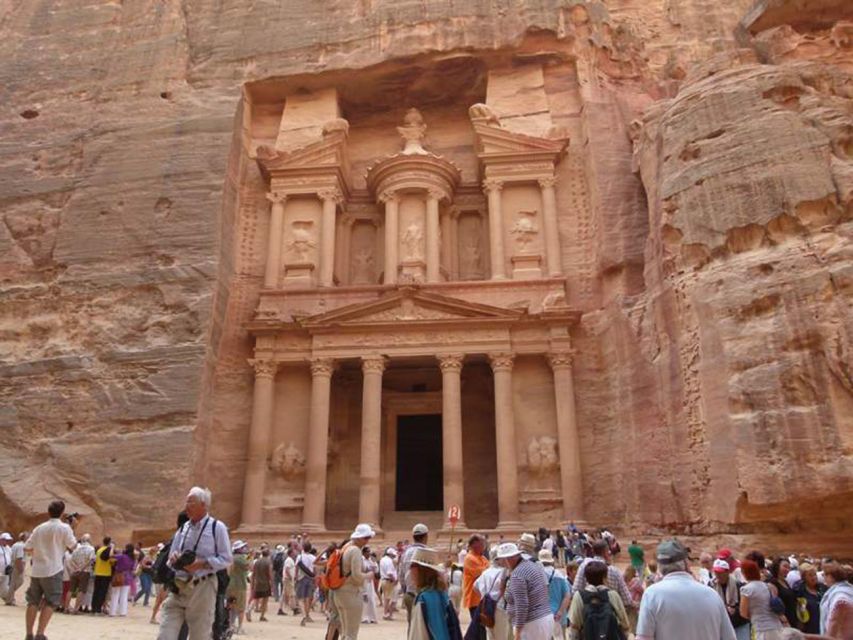
Most people come to Petra for Al Khazneh, the famous Treasury. Even if you’ve seen photos, it hits differently in person because the carvings are scaled for real human height and real canyon light. The Treasury is the moment where the whole site clicks—how Petra uses stone, space, and framing to create drama.
From a tour-planning perspective, this stop is also the most time-sensitive. You’ll want good footwear and a calm head, because it’s the area where crowds tend to gather. In a day tour with long transfers behind you, it’s easy to feel rushed. The fix is simple: slow down on purpose near the Treasury. Take a breath, look up, and let your eyes adjust to the pink rock tones and the carved details.
You’ll also get context for what you’re looking at as you move through the canyon. That guide support matters here, because Petra is architecture plus story, and the story is what turns a landmark into a place you remember.
Roman Theater and the Citadel area: how the city entertained and organized itself
After the Treasury, the tour continues deeper into Petra’s major features, including the Roman Theater. The theater is a key contrast point: Petra may be famous for its canyon carved facades, but this space shows the wider influence of different eras. You can picture how performances and gatherings would have worked in a natural setting designed for viewing from multiple angles.
You’ll also see Temple and Treasures of the Citadel. That part helps you understand Petra not as a single monument, but as a set of connected areas with different functions—public viewing zones, ceremonial or religious spaces, and elevated viewpoints.
In practical terms, these stops are also a stamina test. You’ll be walking between sights, and the day’s earlier travel means you’ll want to manage energy rather than sprint from photo to photo. If you’re traveling with kids or anyone who gets tired easily, this is where a shorter pace and more frequent pauses can save the day.
The King Wall and its 13 graves: more than just an iconic canyon wall
One of the most distinctive features on this itinerary is the King Wall area, including the 13 graves. It’s not the most talked-about stop compared with the Treasury, but it’s a powerful one because it shifts the focus from spectacle to scale. These graves are part of the monumental cliffside design that makes Petra feel like a carved world rather than a set of ruins.
Why it’s worth your attention: it helps you see Petra’s purpose as more than architecture meant for tourists and cameras. It was a place people shaped for meaning and memory. When you stand there, the cliff face becomes a timeline—stone work preserving status, belief, and identity through time.
If you’re the type who likes history, this section will be a satisfying payoff after the big photo landmarks. If you’re there mainly for beauty, it still works, because the canyon wall views are dramatic and the details are close enough to notice without needing special equipment.
Lunch after Petra: a real sanity saver on a long day
Once your Petra time is done, you’ll have lunch in a local restaurant. This sounds basic, but on a day trip this matters a lot. Long transfers plus canyon walking can make you hungry in waves. Having a guaranteed meal slot keeps you from burning energy hunting for food.
Hydration is another practical issue. Petra can get hot, and you’ll do best if you bring plenty of water. The tour setup includes planned breaks during travel, but in Petra itself you’re responsible for your own comfort. I like to think of water as your passport to enjoying the sites instead of surviving them.
Also, keep your meal time in mind when you plan your pace earlier. If you burn all your energy chasing the perfect angle too quickly, lunch won’t fix the fatigue. Better to pace yourself and let the day end with food instead of exhaustion.
Price and value: what $329 covers (and what it doesn’t)
At $329 per person, you’re paying for a full packaged effort: hotel pickup and drop-off, air-conditioned vehicle transport, ferry tickets, a Jordan entry visa, Petra entrance fees, an on-site tour guide, and lunch. That’s a lot of what usually becomes separate costs on DIY travel.
Is it expensive? It’s not cheap, but it can be good value if you’d otherwise be buying individual transport pieces (ferry + crossings), paying entry fees, and coordinating your own schedule. For a one-day Petra visit from Sharm, the package saves you stress—and that’s not just convenience. It’s time and energy you can spend inside Petra.
What I’d treat as a personal cost: water, snacks, and any extras you decide to buy during the day. Petra also has the usual shops and bargaining atmosphere near key areas, and it’s smart to keep your wits about you if you don’t like being pulled into price talks.
Bottom line: if you want a managed day trip with major costs handled, this price can make sense. If you prefer independent travel and can handle border logistics yourself, you may find cheaper ways, but they come with more planning work.
Guide support, group size, and language comfort
This tour includes a tour guide on-site, and you may be supported in English or Russian. Some guides named in the experience include Mohammad, Mayos, and Alladin—and multiple people praise the way these guides explained what you were seeing and helped keep the day organized.
That said, one review experience highlighted that the guide on a transport segment spoke mostly in Russian and not everyone could follow. Translation can matter when you’re tired after 20-plus hours of travel. If language is important to you, I’d ask what language will be used for each segment and confirm where English support will be available.
Group size is another factor. One person reported a group of around 48 people, with mostly Russian speakers. Larger groups can still be fine if the guide keeps everyone moving and you don’t need constant one-on-one attention. Just plan to adjust your expectations: your day won’t feel like a private tour, and your best photos might come when you step slightly away from the main flow.
Packing list that actually helps (passport, shoes, and water)
You don’t need a long shopping list. You need the basics that keep you comfortable for a long travel day and a walk-heavy site.
Bring:
- Passport or ID card (needed for the Jordan entry process)
- Comfortable shoes (Petra walking takes real effort)
- Comfortable clothes (you’ll be on the move for most of the day)
- Plenty of water (heat inside Petra can be intense)
I’d also suggest thinking in layers. Vehicle and ferry temperatures can feel different from the outdoor canyon air. A light layer can save you from feeling too cold in air-conditioning and too hot outside.
And here’s the small-but-useful tip: keep essentials easy to grab. If you’re reaching into bags over and over, you lose time and patience. With a trip this long, small frictions pile up.
Should you book this Petra day tour from Sharm?
Book it if:
- You want Petra’s top sights—Treasury, Roman Theater, and King Wall graves—in one go
- You value someone else handling the ferry, entry visa, entrance fees, and on-the-ground guidance
- You’re okay with a very long day and can enjoy the trip even when it’s not relaxing
Skip it (or rethink) if:
- You strongly dislike long travel days and won’t handle a 20–23 hour itinerary well
- You need guaranteed English support for every transport segment and can’t flex on that
My take: this is a serious time commitment, but it’s also a straightforward way to turn one bucket-list day into reality without spending your energy on logistics. If you can manage the marathon part, Petra’s carved stone will do the rest.
FAQ
How do I travel from Sharm El Sheikh to Petra on this tour?
You’ll start with hotel pickup in Sharm El Sheikh, travel through the Sinai Peninsula to Taba, take a ferry across the Gulf of Aqaba to Jordan, and then drive to the area of Ma’an before reaching Petra.
What Petra sites are included in the visit?
You’ll visit Al Khazneh (the Treasury), the Roman Theater, and the King Wall graves, including the 13 graves.
What’s included in the price?
The tour includes hotel pickup and drop-off, air-conditioned vehicle transportation, ferry tickets, Jordan entry visa, Petra entrance fees, an on-site tour guide, and lunch.
How long is the day?
It’s a full-day trip that can run around 20 hours, and in some cases closer to 23 hours.
What language options are available?
The tour is offered in English and Russian.
What should I bring?
Bring your passport or ID card, comfortable shoes, and comfortable clothes. It’s also smart to carry water since it can be hot.